


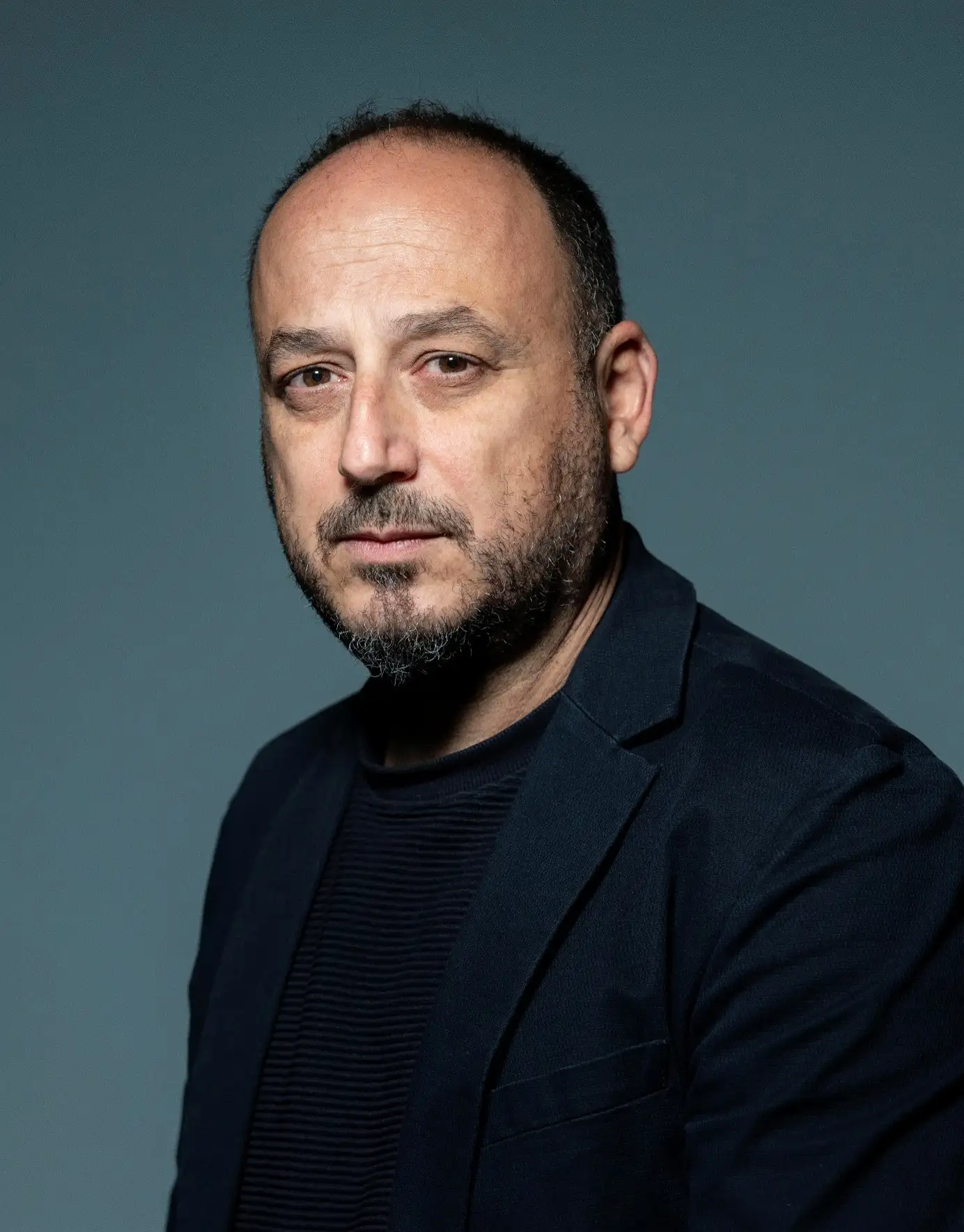
Kosovo has emerged as one of the most compelling voices in European cinema, with filmmakers whose personal stories resonate far beyond national borders. Among them is Samir Karahoda, a director, cinematographer, photographer, tutor, and long-time curator of DokuFest’s short film programme. A graduate of Mimar Sinan University in Istanbul, Karahoda is also the founder of the independent production company SK Pictures.
His directorial debut, In Between (Në mes), premiered at the Berlinale in 2019. Displaced (2021) and On the Way (2024) later competed at the Cannes Film Festival, while Displaced received major awards at Toronto and Sundance and was nominated for the European Film Awards. A member of the European Film Academy, Karahoda has spent more than two decades contributing to Kosovo’s cinematic culture both through his films and his work at DokuFest.
In this conversation, Karahoda discusses his journey from photography to filmmaking, the international rise of Kosovo cinema, the creative freedom of short films, and DokuFest’s 25-year evolution. At the heart of the discussion is cinema’s ability not only to document history, but also to preserve the emotions, memories, and everyday experiences that continue to live within people.
TR | EN | Türkçe versiyona buradan ulaşabilirsiniz.
First of all, thank you so much for taking the time to be with us despite your busy schedule. Your journey began with photography and continued through cinematography, directing, and curating. How did your relationship with cinema begin? How did these different disciplines shape your relationship with art, and how did they nourish one another?
As a child, I always wanted to shoot films, but at that time, studying cinematography elsewhere in Europe was not a realistic possibility for me. These were difficult years in Kosovo, when the signs of the approaching war were already becoming visible. Türkiye had created educational opportunities for students from Kosovo, and in 1998, I began studying photography at Mimar Sinan University in Istanbul.
Because photography and cinematography share a similar visual language, I began using photography as a way of telling stories. Professor Kâmil Fırat at Mimar Sinan University played an important role in this journey. During my master’s studies, I presented a photographic project to him, and he encouraged me to explore the subject more deeply.
When I returned to Kosovo, I continued thinking about how I could take the project further. Eventually, I realised that it needed time, movement, and voices—and that it could become a film. This project became my first film, In Between, which premiered at the Berlinale in 2019 and became the first film from Kosovo to compete in the Berlinale Shorts programme.
I remain deeply grateful to Türkiye and to my professors at Mimar Sinan University, because my journey into cinema began there.

Prizren is a city where different cultures, languages, and memories have coexisted throughout history. You also spent some time in Istanbul during your education. How do you think this multilayered cultural environment has influenced your perspective on the world and your cinematic language?
Growing up in Prizren, I was surrounded by different languages, religions, traditions, and layers of history. So, from an early age, I learned that the same place can contain many different perspectives and memories.
Istanbul expanded this experience on a much larger scale. Living there taught me to observe the relationship between people and cities, and how history, politics, and everyday life are constantly present within the same space.
I believe this influenced my cinematic language by making me attentive to small details, gestures, spaces, and silences.
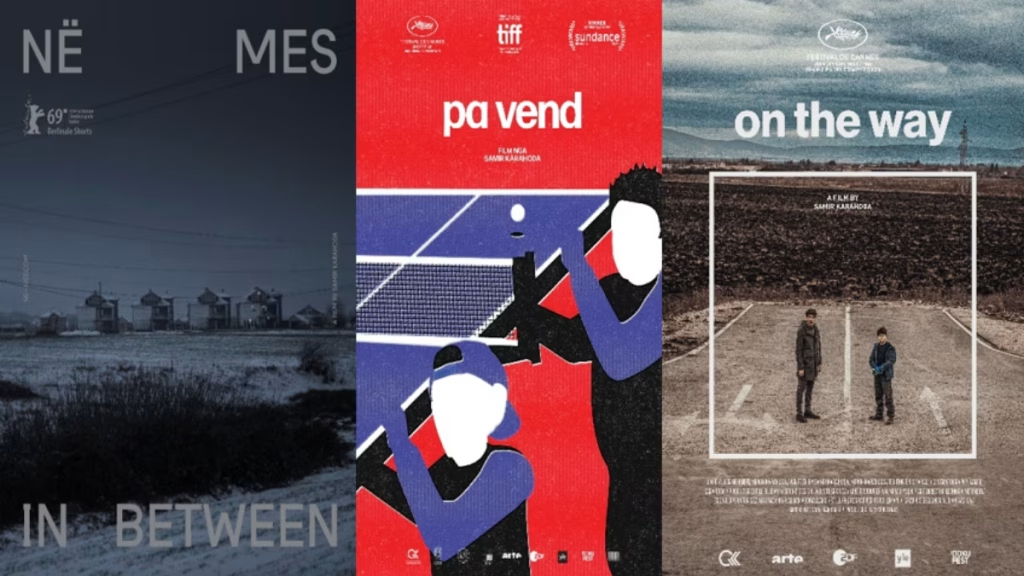
With In Between at the Berlinale and Displaced and On the Way at Cannes, your films have been screened at some of the most important festivals in the world. Did these experiences bring you international visibility and create new opportunities for you?
These experiences certainly gave my films greater visibility and helped me build a certain level of trust internationally, although I try to remain modest about what that means. Festivals are important, but they are not the main goal.
Since my films often deal with social and political realities, being selected by major festivals gives these subjects a wider platform. It also creates curiosity among audiences, the media, and even politicians who might otherwise never encounter these stories. A film shown at a smaller festival may be equally valuable artistically, but naturally, it is often more difficult for it to attract the same level of attention.
I have been very fortunate that all three of my films premiered at some of the world’s most important festivals and later received significant awards. This visibility benefited not only me as a filmmaker, but also Kosovo, a country that still needs greater cultural visibility and more opportunities to be represented through its artists and stories.
I also see short films as an important step towards future projects. A successful short film can build trust in a filmmaker and show potential partners that supporting their next project is a worthwhile investment. I understand this more clearly now while developing my first feature film, as the journey of my short films has helped create confidence in the new project and opened doors to new collaborations, something that has become increasingly difficult in today’s film landscape.
“Festivals are important, but they are not the main goal.”
As both a short filmmaker and a programmer who has spent many years watching short films from around the world and discovering new voices, what has surprised you most about the changes in short film production? What do you think is the greatest strength of short filmmakers today? Have you observed a significant transformation in the storytelling approaches of young filmmakers?
In recent years, I have noticed a new confidence among younger filmmakers. What impresses me most, and what I always look for when watching films, is the director’s approach to the subject. Today, I believe that how a filmmaker tells a story is often more important than the story itself.
The greatest strength of young short film directors today is their freedom to experiment. They move easily between fiction, documentary, animation, and hybrid forms without feeling obliged to follow conventional narrative structures.
Technology and expensive equipment are no longer the decisive factors. What matters is how filmmakers use the tools available to them, how clearly they develop their cinematic language, and whether a story rooted in a particular place can still communicate with audiences around the world.
“How a filmmaker tells a story is often more important than the story itself.”

We are witnessing films from Kosovo becoming increasingly visible at international festivals. Kosovo’s film industry is quite small compared with those of many European countries. What do you think lies behind this growing interest? Is it possible to speak of a shared creative approach or cinematic language that distinguishes contemporary Kosovo cinema from that of previous generations?
Before the war, film production in Kosovo was effectively prohibited by the Serbian authorities. For almost eighteen years, no feature film was made in the country. In 2003, the first feature film after this long interruption was produced, and I worked on it as a set photographer.
In a way, a generation of filmmakers had grown up with a strong hunger to tell stories from our country. The war produced many painful stories, but its consequences have often been even more complex and long-lasting than the war itself. Kosovo’s unresolved political relationship with Serbia, the prolonged international presence, economic difficulties, migration, and social transformation continue to shape everyday life and generate new subjects for cinema. Kosovo is therefore not a place where stories are lacking; the greater challenge has always been finding the resources to tell them.
I am not sure that we can speak of one common cinematic language, because the new generation of Kosovar filmmakers is quite diverse. However, many of the films share a direct relationship with lived reality. They often combine personal stories with wider social or political questions, and they tend to work with modest means, which can also encourage greater formal inventiveness.
The growing international success of these films has gradually encouraged public institutions to recognise cinema as a national priority. Increased public support and access to international co-productions have contributed significantly to this development. As a small country with limited resources, Kosovo demonstrates how even relatively modest and consistent support can produce results that travel far beyond its borders.
Considering the social transformations the country has undergone, what kinds of stories do you expect Kosovar filmmakers to focus on more in the future? Are there any narrative areas you would especially like to see explored or are particularly curious about?
I do not think Kosovar filmmakers should focus on only one subject. What happened to us must continue to be told and documented, especially for younger generations, because many experiences remain untold and should not be forgotten.
At the same time, our cinema must also engage with the present: injustice, inequality, migration, political frustration, and the rights of women, children, and other vulnerable groups. The consequences of the war are still visible, but they are only one part of today’s reality.
What I find encouraging is that Kosovar filmmakers are already working in many different directions, exploring war, politics, gender, family, migration, and everyday social life. We have too many stories to reduce our cinema to only one or two themes.
I am also proud that filmmakers in Kosovo generally have the freedom to express themselves without political interference. This creative freedom is one of the greatest strengths of our cinema.
“We have too many stories to reduce our cinema to only one or two themes.”
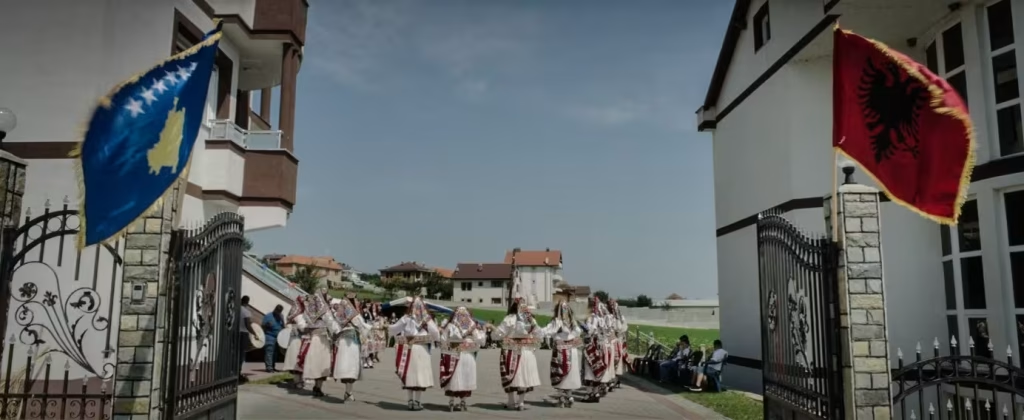
Kosovo’s recent history has been shaped not only by major political events but also by the small memories carried through people’s everyday lives. As a filmmaker, how do you think these invisible layers of memory, carried by families, cities, and individuals, find their place in cinema?
Cinema is especially powerful when it approaches history through intimate and everyday experiences. Major political events are usually documented through dates, facts, and official narratives, but their real consequences often remain visible in families, gestures, silences, and ordinary spaces.
These invisible layers of memory can appear in the way people speak, in what they avoid speaking about, in the objects they preserve, or in the relationship they have with a house, a street, or a city. Sometimes a very small personal story can reveal much more about a country’s history than a direct explanation of the political context.
In my films, I try not to impose these memories on the audience or explain them too much. I prefer to let them emerge gradually through the characters, the spaces they inhabit, and the details of their everyday lives. For me, cinema can preserve not only what happened, but also how those experiences continue to live inside people.
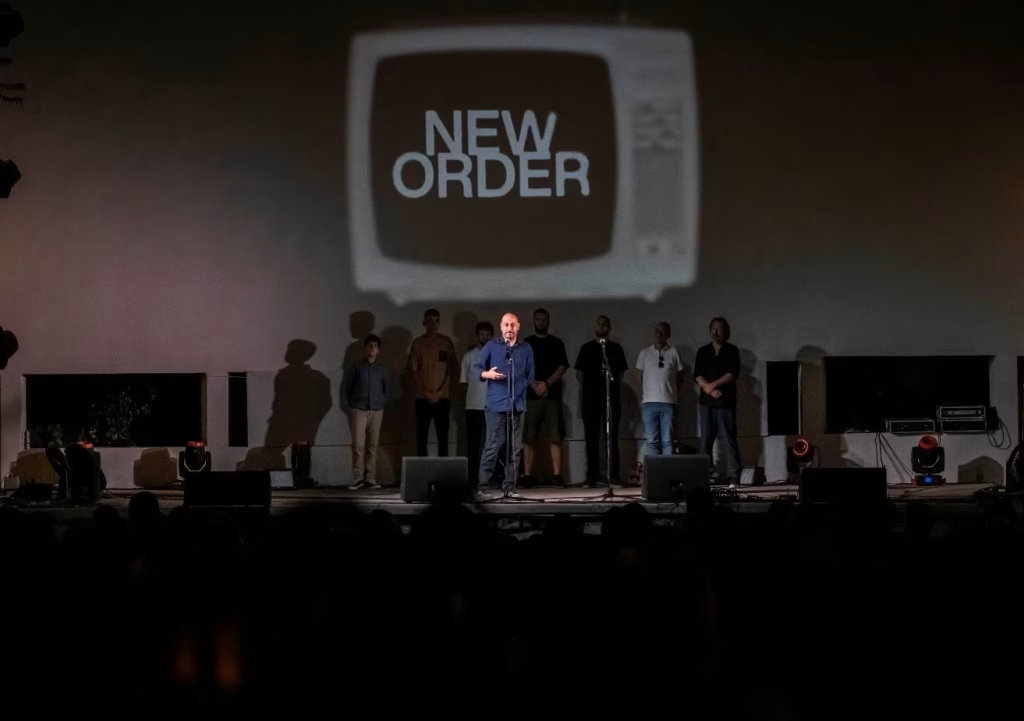
Last year, while introducing DokuFest’s short film selection, you spoke about the reflection of “a world that is no longer the same as before” and a bold cinematic language. A year later, while preparing the 2026 selection, what change in world cinema affected you most? What common tendencies shaped this year’s selection?
I noticed that many filmmakers are moving away from direct or conventional forms of storytelling. They are using hybrid forms, fragmented narratives, humour, absurdity, archival material, and very personal perspectives to speak about much larger realities. Even when the films deal with difficult political or social subjects, they often do so through intimate situations rather than broad statements.
This year’s selection was therefore shaped less by one specific theme than by a shared feeling: that the world is becoming more uncertain, and that conventional forms are sometimes no longer sufficient to describe it. What interested us most were films that found a precise and original cinematic language for that uncertainty.
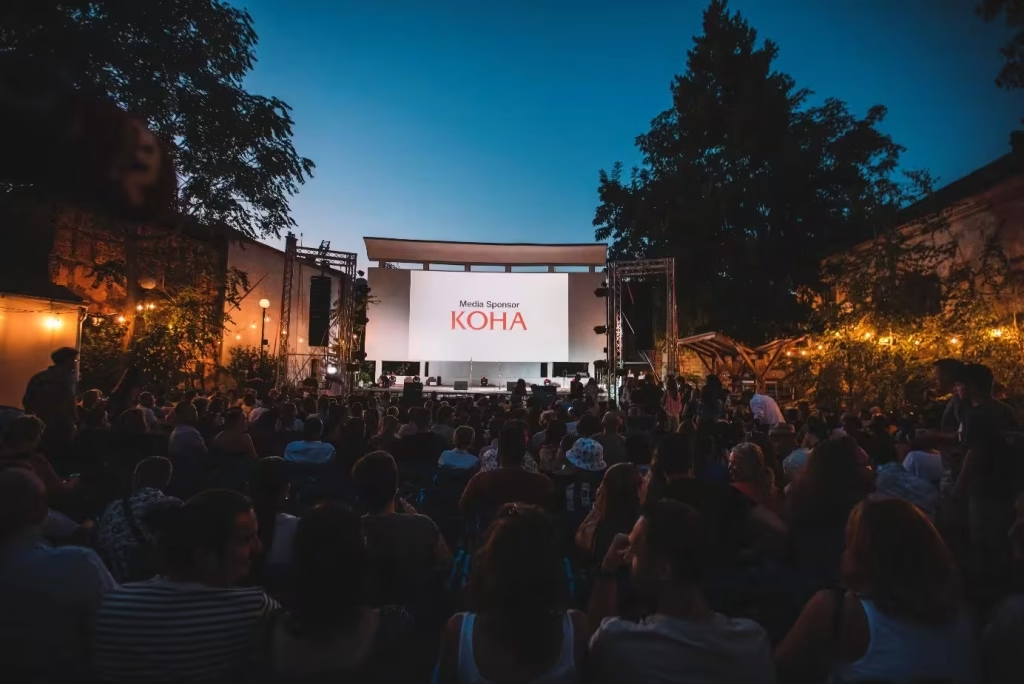
DokuFest began as a volunteer-led initiative in a small city. Today, however, it has become an award-winning festival followed by many major festivals around the world. What do you think DokuFest has managed to preserve as it has grown, and what makes it special?
I think what DokuFest has managed to preserve most is its original spirit: the feeling of a collective effort built around trust, friendship, and a genuine love for cinema. Even as the festival has grown, the team has remained close, and this creates a special atmosphere that guests and filmmakers immediately feel.
Hospitality has also played a very important role. People do not come to DokuFest only to screen or watch a film; they come to experience Prizren, meet other filmmakers, exchange ideas, and become part of the city for a few days.
What also makes DokuFest special is the role it has played in promoting Kosovo internationally. It has brought important filmmakers and industry professionals to the country, while at the same time creating opportunities for local authors to present their work and build international connections.
I believe the festival’s strength also comes from the fact that it was never created for prestige alone. It grew from a sincere need to create a cultural space, and that intention is still present today.
“DokuFest’s greatest legacy is the cinema culture it has helped build in Kosovo.”
For independent filmmakers, a festival is also a space where new collaborations and career opportunities begin. How do you think festivals shape this ecosystem today? Do you think this role has changed in recent years?
Festivals today are much more than places where films are screened. For independent filmmakers, they are often the first spaces where they meet future collaborators, producers, sales agents, programmers, and supporters. Many important professional relationships begin through informal conversations rather than official meetings.
A filmmaker may develop a project in one country, finance it through several others, and find an audience through festivals around the world. In this sense, festivals have become an important part of an increasingly international production and distribution ecosystem.
At the same time, the festival landscape has become more competitive. This is why festivals also have a responsibility to create real opportunities, especially for emerging filmmakers, rather than simply presenting their work and moving on.
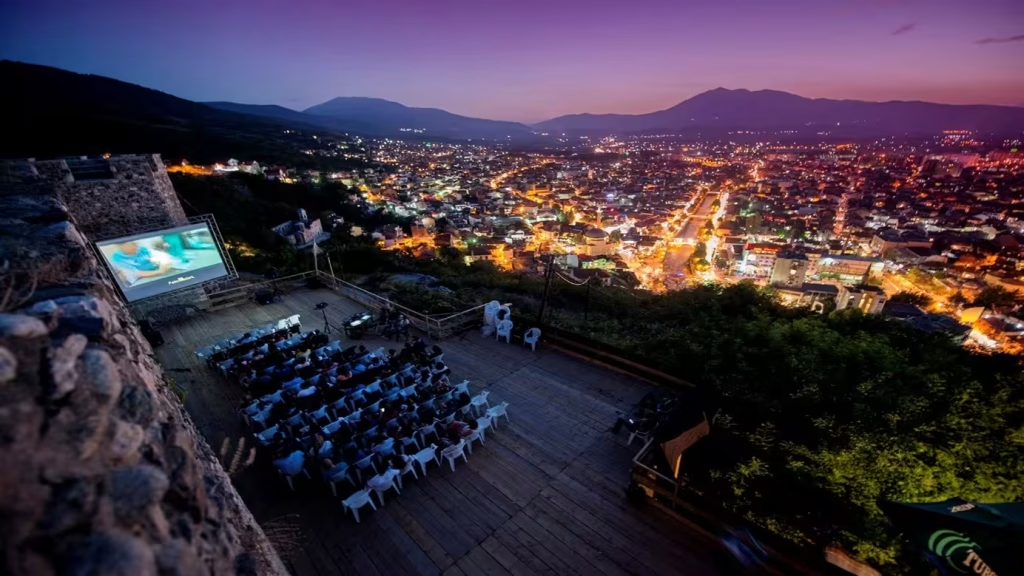
DokuFest is celebrating its 25th anniversary this year. What do you think is the festival’s greatest legacy for Kosovo cinema? How do you imagine DokuFest’s role within regional cinema and the international film ecosystem in the coming years? How have you seen the relationship between the festival audience and cinema change over the years?
I believe DokuFest’s greatest legacy is the cinema culture it has helped build in Kosovo. Over twenty-five years, it has introduced audiences to films and cinematic languages that would otherwise have been difficult to access. It has encouraged young people to see cinema not only as entertainment, but also as a space for artistic expression, critical thinking, and social engagement.
This legacy is also visible in the city itself. When DokuFest began, Prizren had only one cinema. Today, the festival operates across nine venues, including open-air and alternative spaces created or revived over the years. This transformation shows how a festival can influence not only cultural life, but also the infrastructure and identity of a city.
DokuFest has also had a significant economic impact. Every summer, thousands of visitors, filmmakers, and professionals come to Prizren, supporting local hotels, restaurants, cafés, and small businesses. The festival has helped establish Prizren as an international cultural destination and demonstrated that investment in culture can create wider social and economic value.
Education is another important part of its legacy. Through its year-round programmes and projects for young people, DokuFest is helping develop the filmmakers and audiences of the future. Participants learn not only how to make films, but also how to use cinema as a tool for expression and social change. For many of them, these programmes provide the first opportunity to tell their own stories and engage with issues affecting their communities.
In the coming years, I see DokuFest continuing to act as a bridge between regional and international cinema, while creating more opportunities for emerging filmmakers, education, and professional exchange.
The audience has also changed significantly. In the beginning, many people were attracted primarily by the event and its atmosphere. Over time, a more informed and demanding audience has developed. Today, viewers follow filmmakers, recognise different cinematic approaches, participate in discussions, and are more open to challenging films. For me, this transformation is one of DokuFest’s most meaningful achievements.

Leave a Reply