

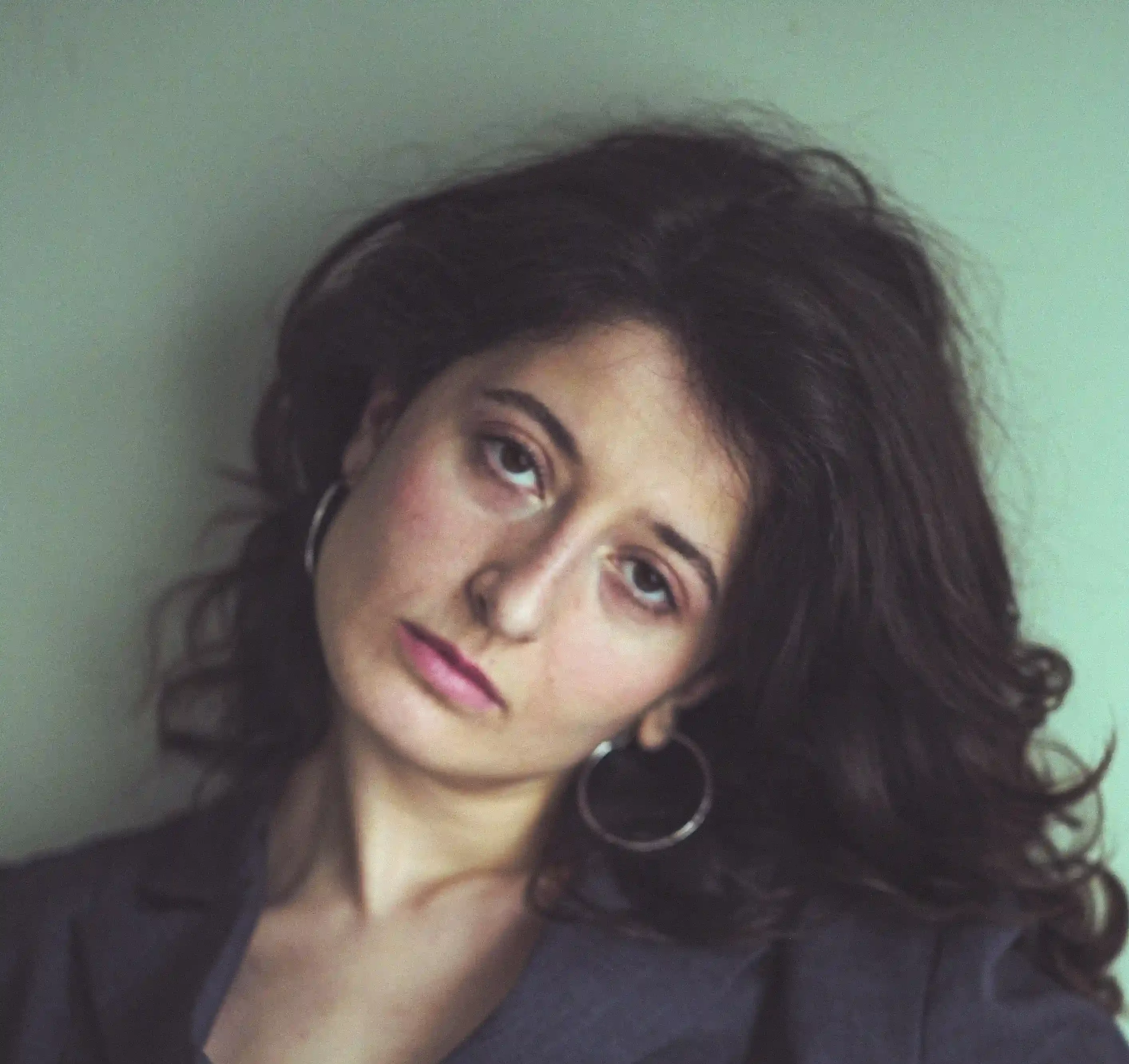
This year, Talents Sarajevo brought together 50 emerging film professionals selected from 632 applicants across Southeast Europe and the Southern Caucasus as part of the 32nd Sarajevo Film Festival. Actor and writer Yağmur Ruken Kahraman, one of the participants selected from Türkiye for the Acting Studio, joined a group of nine actors from different countries.
We met Kahraman between festival events and spoke with her while walking through the streets of Sarajevo. She reflected on her Acting Studio experience, the application process, her ambition to build international connections through acting and her ongoing projects. Kahraman also discussed a documentary project that grew out of her sociology thesis and centres on a mourning ritual practised in an Alevi village in Kayseri.
This interview was conducted in Turkish while walking between festival events. It has been translated into English and edited for length and clarity while preserving the natural tone of the conversation.
Türkçe versiyonu için linke tıklayın. TR
How has your Sarajevo Film Festival experience been so far?
Above all, it has been very intense. It is enjoyable but also tiring. The people I have met, the events I have attended and the overall atmosphere of the city have all been wonderful. This is my first time in Sarajevo.
The first few days were a little challenging because the programme is spread across different parts of the city. We were constantly trying to get from one place to another. Now that I am becoming more familiar with the city, I feel more comfortable finding my way around. I think I will be able to enjoy the coming days even more.
What excites you most about the Acting Studio programme?
We have started attending the masterclasses organised as part of the Acting Studio. We are a small group of actors from different countries. I am excited by the opportunity to share our experiences, discover different approaches to acting and find common ground through our work.
The open-air screenings, the other films I will watch and all the encounters that take place throughout the festival are also important parts of this experience.

Which film or event has made the strongest impression on you so far?
So far, I have seen Fatherland and Ashes. Watching Fatherland outdoors on the opening night of the festival was particularly memorable. The atmosphere of the venue and the film’s cinematography came together to create a magical experience.
That is the moment I would highlight for now, but I am hoping the days ahead will surprise me even more.
“Rather than relying on general statements, it is important to say something personal and meaningful about your relationship with acting.”
What was the Talents Sarajevo application process like? What would you recommend to actors from Türkiye who are considering applying?
I spoke with friends who had applied before and with people who had experience of the programme. They told me that it would strengthen my Acting Studio application if I could explain how my personal story relates to the way I approach acting.
The application requires a motivation letter, a résumé and standard materials related to your previous work. Beyond these materials, it is important to express yourself clearly and say something personal and meaningful about your relationship with acting. Instead of preparing a generic application, I would recommend taking the time to think seriously about why you want to be part of the programme.
“Even though I am not currently in a position to make my own film and take it to a festival, I thought applying to Talents Sarajevo would be a good first step towards meeting people and building international connections.”
What was the Talents Sarajevo application process like? What would you suggest to actors from Türkiye who are considering applying?
I spoke with friends who had applied before and with people who had experience of the programme. They told me that it would strengthen my Acting Studio application if I could explain how my personal story relates to the way I approach acting.
The application requires a motivation letter, a résumé and standard materials related to your previous work. Beyond these materials, it is important to express yourself clearly and say something personal and meaningful about your relationship with acting. Rather than preparing a generic application, one suggestion I could offer is to take the time to think carefully about why you want to be part of the programme.
What motivated you to apply, and what were you hoping to gain from the programme?
My main motivation was to meet people and build international connections through acting. In Istanbul, we continue producing work in theatre and cinema as much as we can. It is very rewarding but also difficult. I was thinking about how I could take my work beyond Türkiye and become part of a more international creative network.
Even though I am not currently in a position to make my own film and take it to a festival, I thought applying to Talents Sarajevo would be a good first step towards meeting people and building international connections. I wanted to see how people in other countries create their work, meet them and establish connections that might continue in the future.
Being part of a programme designed specifically for its participants offers a very different and productive experience from attending the festival solely as a member of the audience.
Could you tell us about your recent and upcoming projects?
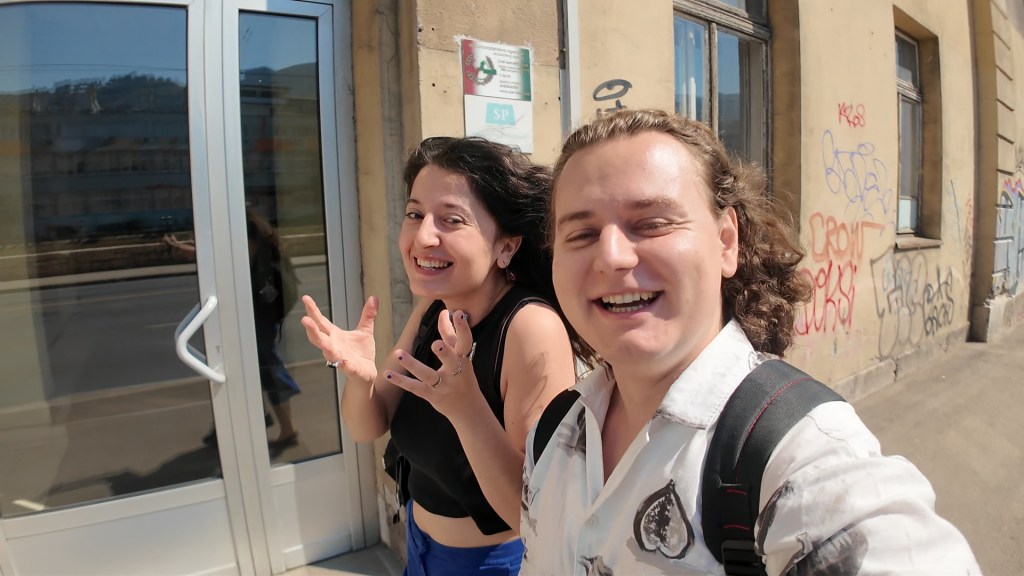
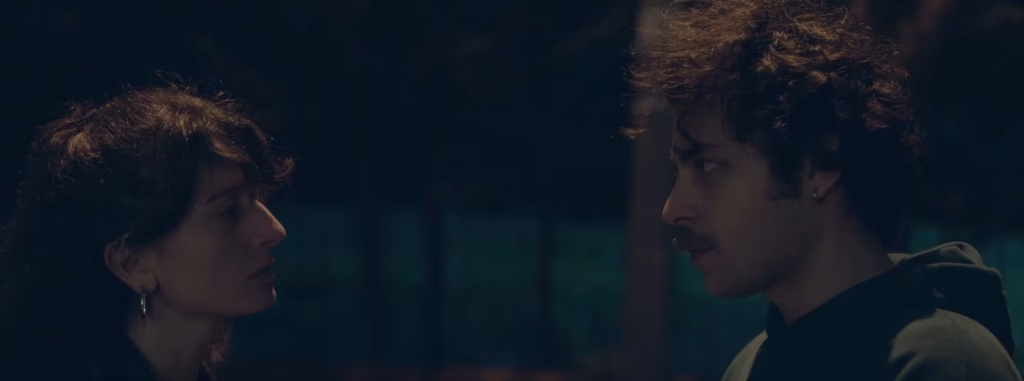
Our short film Love and the Others had its world premiere at Clermont-Ferrand and was later screened at the Istanbul Film Festival. Its festival journey is continuing, and I am excited to see where it goes next.
I have since appeared in several other short films that are currently in post-production. When I return from Sarajevo, I will have a small role in a feature film, which I am also excited about.
Our theatre production Taksim’e Kadar is continuing as well. I am involved in the production as both a co-writer and performer. Alongside these projects, I am also developing a documentary.
“At the heart of the project are grief, the ritual in the village and my own relationship with that place.”
Could you tell us more about the documentary project that grew out of your sociology thesis?
I studied sociology, and the project originally began as my undergraduate thesis. In my mother’s village in Kayseri, an Alevi mourning ritual takes place once a year. Using photographs I took during the ritual, known locally as the Mezar Töreni, I developed a thesis examining representations of grief and mourning.
I later began developing the work as a documentary project. I had the opportunity to participate in several workshops and receive mentorship. I returned to the village in July this year and filmed new material. I am now learning how to prepare the project dossier and navigate the next stages of its development.
The documentary is not only about the ritual itself. It also explores my relationship with a place I have visited since childhood, the village’s spiritual narratives, the community’s relationship with loss and my own experience of grief. That personal connection lies at the heart of the project.

Leave a Reply