


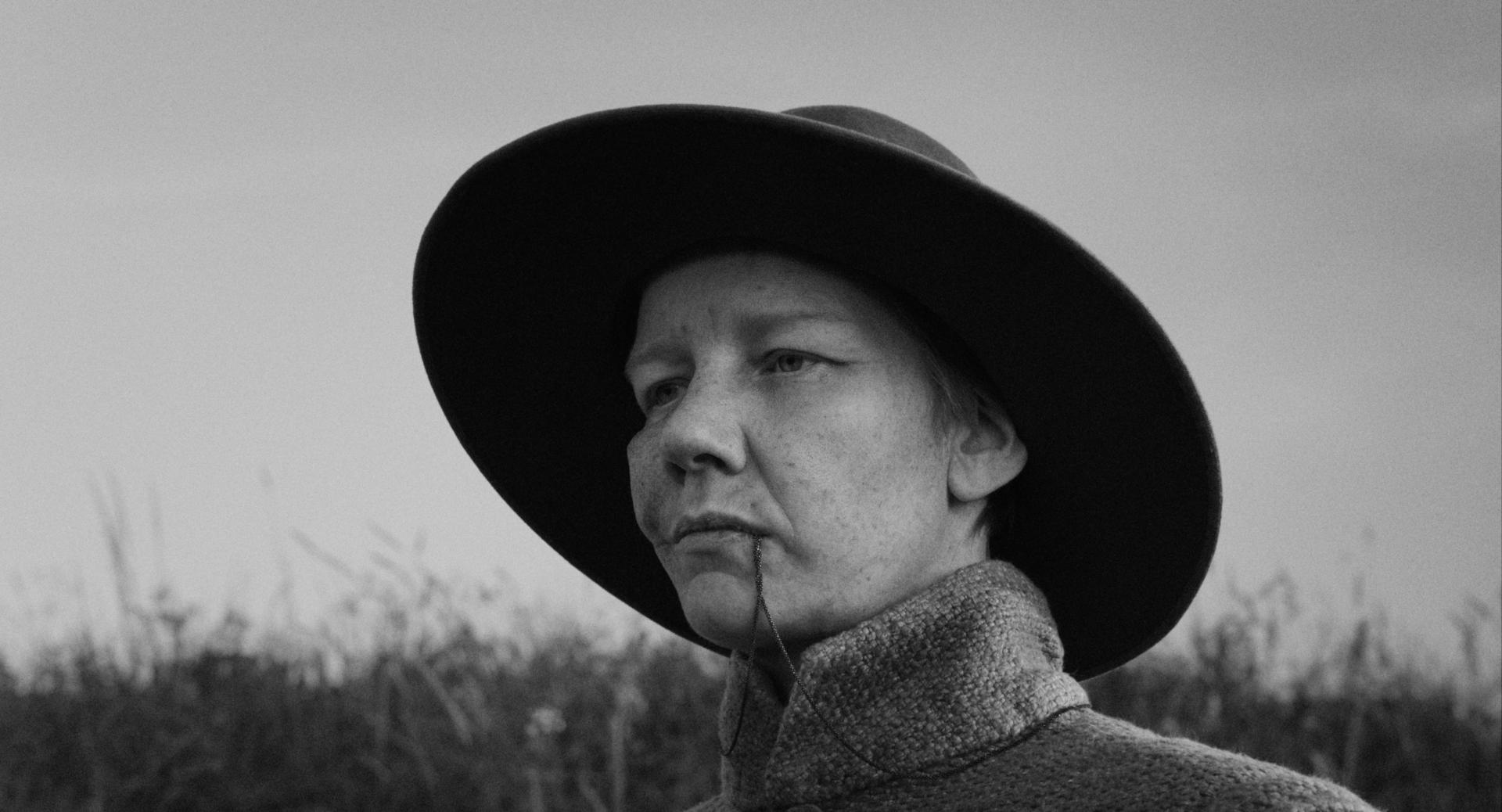
Rose (2026): You Exist Only as Long as You Are Accepted
Screened in the Golden Tulip Competition at the 45th Istanbul Film Festival, Rose (2026), directed by Markus Schleinzer, emerges as one of the strongest contenders in the selection.
TR | EN | Türkçe versiyona buradan ulaşabilirsiniz.
Sandra Hüller commands the viewer’s full attention with a performance marked by the same intensity and control that defined her monologue in Anatomy of a Fall. Awarded Best Actress at the Berlinale, Hüller does more than portray a character—she lays bare how identity is constructed, and how fragile it can be.
“The world will ask you who you are, and if you don’t know, the world will tell you.”
— Carl Jung
Rose is a woman whose real name remains unknown to everyone but the audience. Raised in an orphanage, she has endured life’s hardships alone. Her only desire is freedom. Yet in 17th-century Germany, freedom is reserved for men. Rose does not attempt to dismantle this system; instead, she fits into it seamlessly. Assuming the identity of a man who died in war is not an escape, but a calculated strategy of adaptation.
The film reveals a crucial idea:
Identity is less about essence than we tend to believe, and more about performance.
Constructing Identity: Existing as a Role
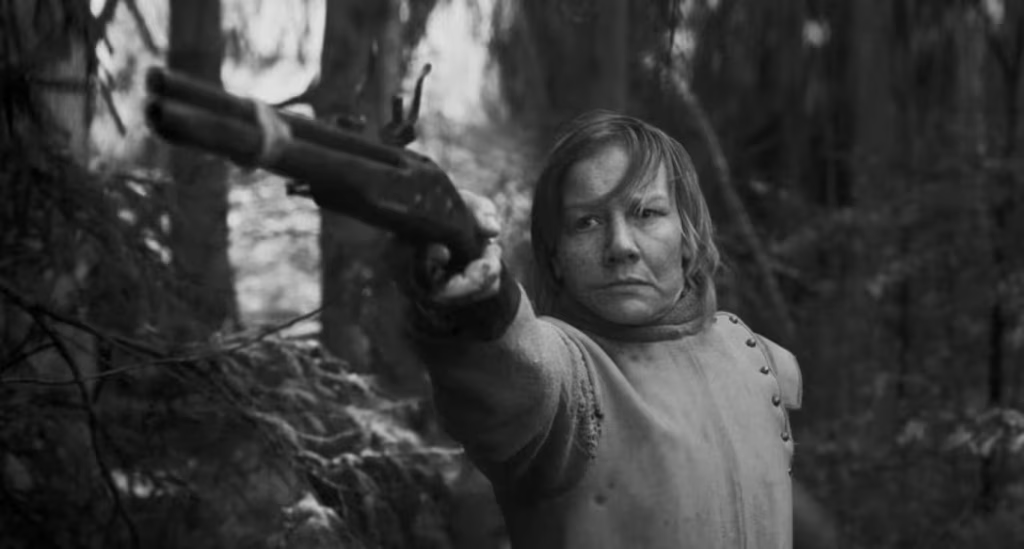
Rose’s “masculinity” is defined not by who she is, but by how she behaves. Her diligence, authority, and the moment she kills the bear threatening the village all reinforce the identity assigned to her by society. This is not merely an act of courage—it is a test in which the expected role is performed to perfection.
At this point, Rose becomes less a person than a role.
Believing she can achieve freedom by conforming to social expectations, she carries this performance to its logical end. Her marriage becomes part of this strategy. Yet the film resists reducing this relationship to a single dimension. The bond between the two women gestures toward something beyond romance—a form of solidarity, a shared way of existing.
This is where the film feels most fragile—and most human.
But that fragility does not last. When Rose’s true identity is revealed, all the meaning assigned to her is instantly undone. The same actions that once earned respect now provoke fear. The identity that was once accepted is suddenly invalidated.
Because society does not reward truth,
but the identity that aligns with its own narrative.
The Collapse: When Truth Emerges
At this point, the film brings an unsettling question into focus: What is truth?
If a person’s value is determined by the role society assigns to them, how much of what we call “truth” truly belongs to us? Rose does not offer a direct answer, but suggests something harsher:
Truth is often beside the point.
What matters is what is accepted.
To sustain this acceptance, society reduces complexity. It categorizes, labels, and confines individuals within rigid roles. Rose’s story lays bare how this mechanism operates: accepted as long as she fits, a threat the moment she does not.
Here, the film moves beyond identity and begins to question the limits of obedience.
The Director’s Choice
The film’s black-and-white aesthetic does more than evoke its historical setting; it reinforces sharp oppositions—right and wrong, acceptance and rejection.
The use of an external narrator, however, is more contentious. While it makes the story more accessible, it also narrows one of the film’s greatest strengths: the audience’s space for discovery. In moments where Rose’s identity might otherwise unfold gradually, the narration accelerates the process and slightly diminishes its impact.
On Freedom
When Rose says, “I did everything society expected of me,” it inevitably brings to mind the defense of Nazi officers after World War II: “I was just following orders.”
This parallel raises an unsettling question:
How innocent is conformity, really?
Here, the film reveals its harshest insight:
Conformity is not always innocent.
Rose chooses not to demand a freedom that will never be granted to her, but to take it.
And she pays the price to the very end.
She is never able to live freely as herself.
Yet within the identity she constructs, she lives within boundaries of her own making.
And in the end,
she does not leave through an identity imposed on her,
but from within the life she has built.
Perhaps she does not live freely.
But she dies free.
What remains is a single question:
When the world asks us who we are,
do we truly answer for ourselves—
or do we simply repeat the role we learned in order to be accepted?

Bir Cevap Yazın