

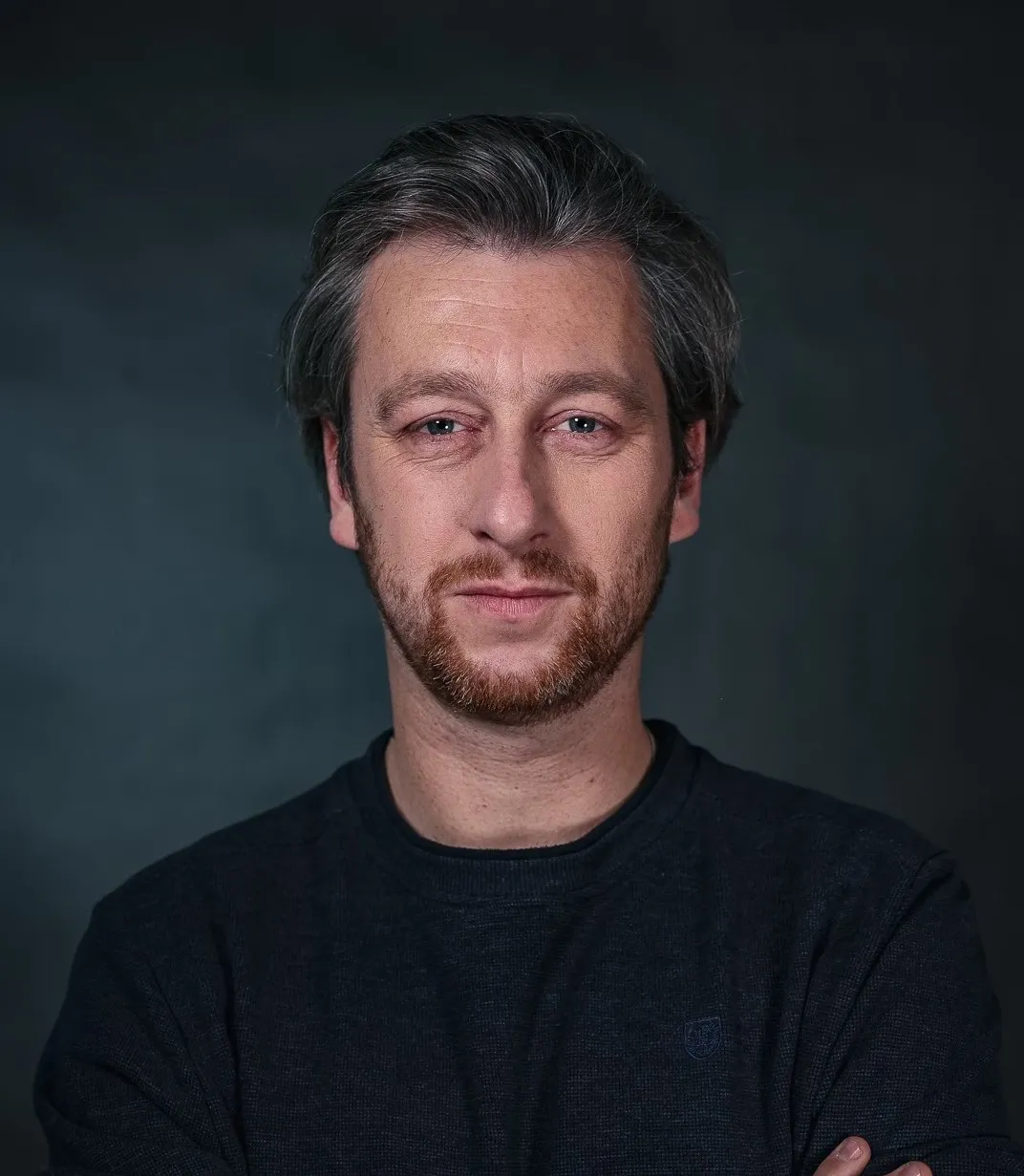
Film festivals play a crucial role in the production, distribution, and long-term visibility of independent cinema. While much of the industry focuses on filmmaking itself, it is often festival programmers and organizers who sustain this ecosystem. At the Warsaw Film Festival (WFF), one of Europe’s leading film festivals, this role is carried by Bartek Pulcyn.
Bartek Pulcyn has been the Programming Director of the Warsaw International Film Festival, a FIAPF-accredited event, since March 2025.
Between 2002 and 2013, he collaborated with the Warsaw International Film Festival as a programmer, curator of the Short Film Competition, and coordinator of the FIPRESCI Warsaw Project workshops. In recent years, he has worked as a programme curator for major events such as the Transatlantyk Festival (2015–2022) and the Summer Film Academy in Zwierzyniec (2023–2024).
Pulcyn is also a cultural animator and film journalist with over fifteen years of experience. He led the film section of the monthly Aktivist and has contributed to Gazeta Studencka, Fluid, Hero, and the online platform Filmweb. For five years, he co-created and hosted the radio programme Filmowe ścieżki, dedicated to film music, broadcast on Radio Plus Warsaw.
We spoke with Bartek Pulcyn about film festivals, programming decisions, and the future of cinema.
TR | EN | Türkçe versiyona buradan ulaşabilirsiniz.
Esra Kars: First of all, I would like to get to know you a bit more closely. Who is Bartek Pulcyn today? How would you describe yourself and your relationship with cinema?
Bartek Pulcyn: I have always been, first and foremost, a lover of cinema. My journey began in 1996, when I bought a January issue of the Polish film magazine Film, with Bruce Willis on the cover. From that moment on, my passion for cinema has shaped all of my later professional decisions.
You have been in the film industry for a long time. In this context, you have taken on roles such as programmer, film journalist, and curator. In this multifaceted career journey, what was the decisive turning point that led you to focus on film programming?
The decisive turning point was my first experience at the Warsaw International Film Festival, which I attended as a viewer. Encountering such diverse, often exotic and powerful cinema made me immediately want to become part of that world — very concretely, to work at the festival.
A few years later, while studying cultural studies, I managed to find the festival office — which was not easy — knocked on the door, and it was opened by the festival’s then director, Stefan Laudyn. That is how I became one of the first volunteers in the festival’s history. A year later, I started working there — first seasonally, and soon after on a permanent basis.
Programming is, for me, the most fascinating aspect of building a festival. I feel very fortunate to be able to transform my personal passion — my love for cinema — into concrete actions that shape the structure and programme of the festival.
Programming is, for me, the most fascinating aspect of building a festival.
Initiatives carried out within your festival, such as the FIPRESCI Warsaw Film Critics Project, in which I also had the chance to take part, open up an important space for young cinema professionals. What kind of expansion or transformation are you aiming for in this field in the coming period? What projects do you have to reach young professionals?
Despite the widespread belief that journalism — including film criticism — is in decline, I am convinced that no artificial intelligence can replace people who share their knowledge, experience, and emotions drawn from the cinema.
We still need voices that encourage, challenge, interpret, and help us understand films. The need to confront our own impressions with those of others will not disappear. The formats may change, the platforms may evolve, but the essence of film journalism remains.
For years, we have supported young filmmakers and professionals through various initiatives, including programmes such as Warsaw Next. We also place strong emphasis on short films — our competition is Academy Award-qualifying in four categories, making it one of the most significant platforms of its kind in Europe.
We still need voices that encourage, challenge, interpret, and help us understand films.
When watching a film, what determines that moment when you say “this film should be in the program”: the story, the director’s vision, technical quality, or something else?
There is no single answer. Cinema affects us in many ways — emotionally, intellectually, morally — and there are many paths to a programmer’s “yes.”
However, I can point to a kind of benchmark: a film that perfectly aligns form and content. For me, that is Christopher Nolan’s Memento. One could say, half-jokingly, that the adequacy of cinematic form to the story can be measured on a scale of “ten Nolans.”
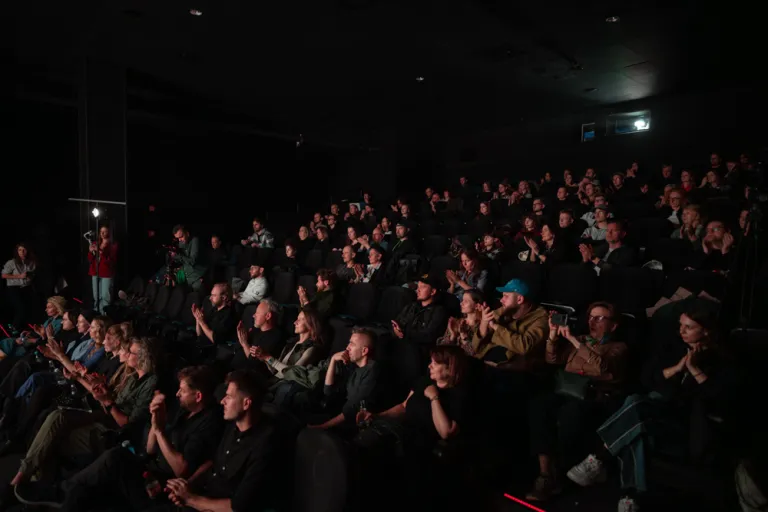
When you are torn between an average film by a well-known director and a strong debut film by a new director, what determines your decision?
Ideally — both. A festival is a space for encounter and dialogue, and both types of films deserve their place.
A strong debut may be selected for the First and Second Feature Competition or the International Competition, while a film by an established director can be presented in Special Screenings, where it meets an audience that is often already waiting for it.
By the nature of your role, you directly influence the discovery of a filmmaker. What criteria do you pay attention to when including new filmmakers in your selection? What are the elements that bring you to the point of saying “there is potential here”?
One could say — at least a seven on the Nolan scale. But more seriously, cinema is deeply personal and emotional, and there is no single formula.
Some films capture you from the very first minutes — and that initial moment is crucial. In the case of short films, it can even be the first scene, or a single shot.
That is when a film grabs you, intrigues you, fascinates you — or leaves you completely indifferent.
An important point is that the festival refocuses on universal values such as freedom, truth, goodness, friendship, and beauty.
Today, we see that many festivals establish a distinct identity through their selections and award preferences. In your opinion, what truly determines a festival’s identity, and how do you position the Warsaw Film Festival in this context?
Awards are in the hands of juries, so they cannot define a festival’s strategy.
The Warsaw International Film Festival has undergone a significant transformation in recent years. One important aspect is a renewed focus on universal values — such as freedom, truth, goodness, friendship, and beauty.
We have introduced a new section, Animus. Cinema of Values, presenting films that explore these themes. We want to send a clear signal that we are interested not only in form, but also in content — content that has the power to engage audiences, invite reflection, and sometimes even change lives.
Because only in imperfect characters can we recognize ourselves.
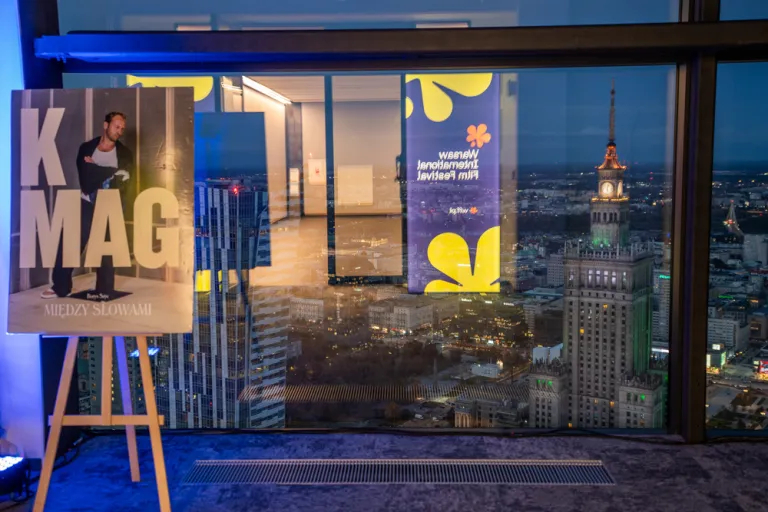
Does a festival transform a city, or does the city shape the festival? Would this festival be the same without Warsaw? What value does Warsaw bring to this festival?
Warsaw is a city that rose from ruins — destroyed to a great extent during World War II, and after decades of communism, it has become one of the most dynamic and modern cities in Europe.
At the same time, it still carries the marks of its history — visible “scars” in its urban fabric. And it is precisely within this space that our festival takes place.
Warsaw is diverse — just like the cinema we present. Perhaps the common thread in many of the films we show is precisely this sense of fracture — imperfect characters, their weaknesses, the challenges they face. That is what makes cinema truly compelling, because only in imperfect characters can we recognize ourselves.
Do streaming platforms strengthen or weaken the audience’s engagement with cinema and festivals in the long term? What are your observations and the approaches you have developed in response?
Streaming platforms have made going to the cinema more of an event — today we need stronger motivation to leave our homes than we did before.
Paradoxically, this may benefit festivals, which offer something more than just screenings — a shared experience, a sense of community. And this is something that, as research shows, younger audiences increasingly seek.
Volunteering is the best way to demonstrate commitment, initiative, and an understanding of how a festival works.
What is the most realistic way to become involved in an international festival as a programmer? What would you recommend to young filmmakers who want to curate festival selections?
I always recommend starting with volunteering. It is the best way to demonstrate commitment, initiative, and an understanding of how a festival works.
Many programmers also have a background in film journalism — the ability to write about and critically engage with cinema is a valuable asset.
For more about the Warsaw Film Festival, visit the festival’s official website.

Bir Cevap Yazın