


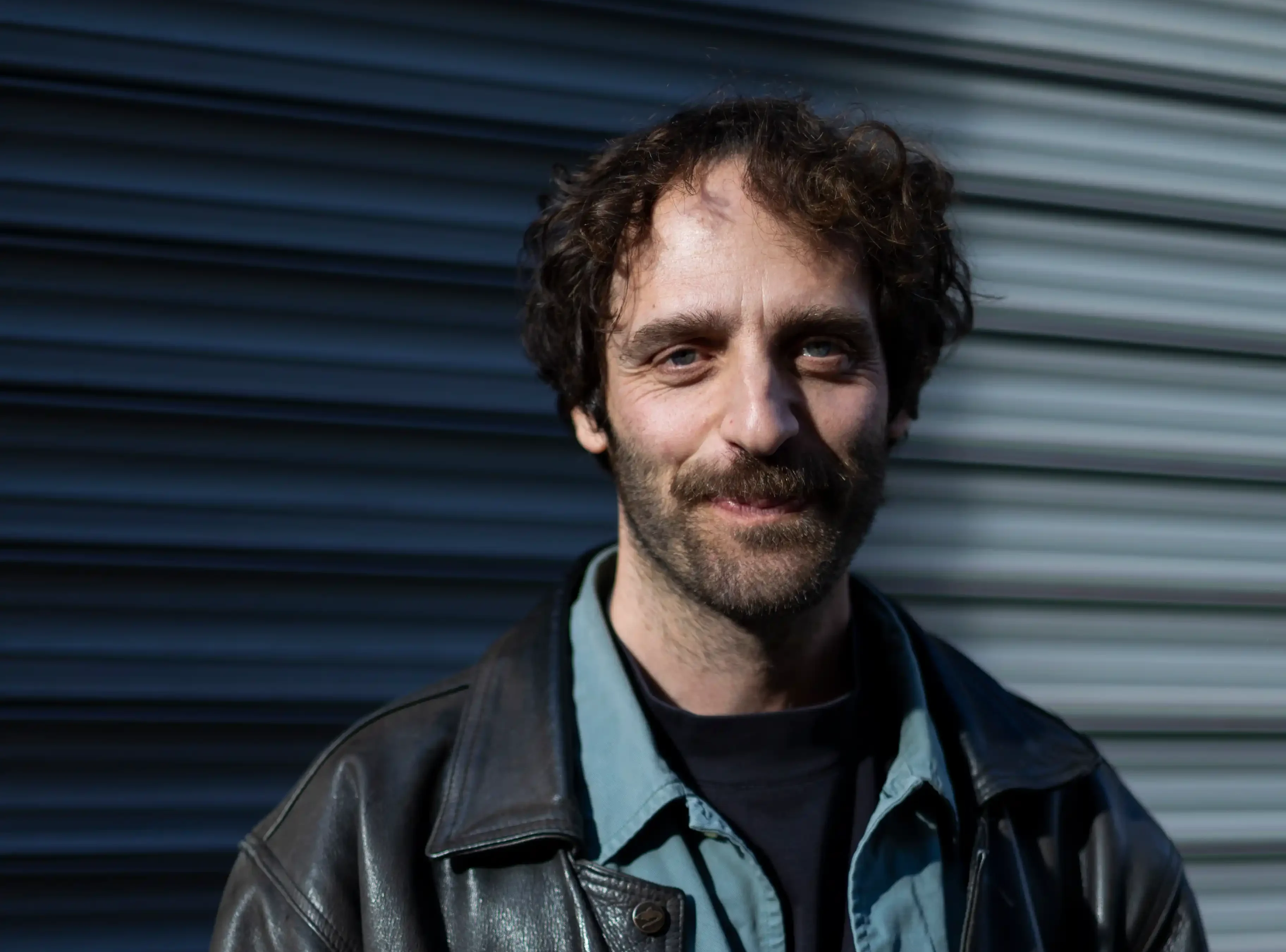
Born on the Greek island of Zakynthos in 1984, Stavros Petropoulos is a filmmaker and producer whose work spans fiction, documentary, and television. He studied Sociology at the University of Crete before earning a degree in Media, Communications and Cultural Studies from Goldsmiths, University of London.
In 2013, he co-founded Alaska Films with producer Leonidas Konstantarakos. His films have screened at major international festivals including Tribeca Festival, Clermont-Ferrand, CPH:DOX, the Sarajevo Film Festival, and the Thessaloniki International Documentary Festival, receiving numerous awards and distinctions. Across his body of work, Petropoulos explores themes of identity, place, and social relations through a visually precise cinematic language that often blurs the line between observation and performance.
This interview focuses on Petropoulos’ latest short fiction film, Pirateland. Pirateland received the Bronze Cherry Award at the 2026 Koker International Short Film Festival. Set on the Greek island of Crete, the film follows a struggling family-run guesthouse that welcomes a group of Norwegian tourists searching for an “authentic” pirate experience. What begins as harmless entertainment gradually evolves into an unsettling role-playing game in which hospitality, performance, desire, and power become increasingly intertwined. Through meticulously composed imagery, striking color palettes, and an atmosphere that oscillates between comedy and psychological unease, Pirateland offers a sharp reflection on contemporary tourism, the commodification of authenticity, and the growing desire to consume experience itself rather than simply travel.
TR | EN | Turkish version here.
“Pirateland was born somewhere within that contradiction.”
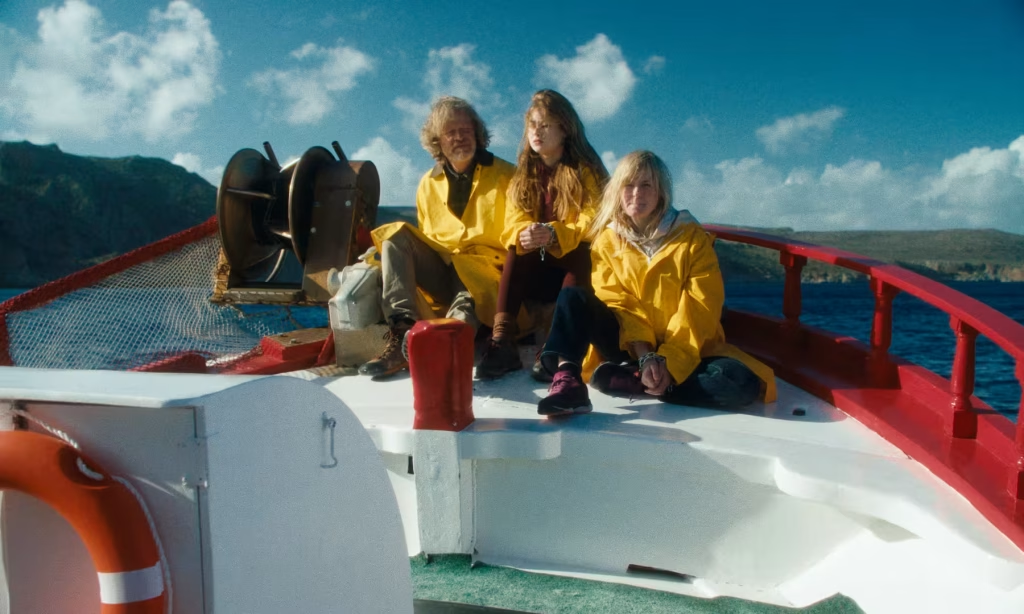
Pirateland begins as a story about tourism but gradually unfolds into a layered exploration of performance, desire, and the experience economy. What was the initial idea that sparked the project?
The initial idea came from a very personal contradiction. I grew up on Zakynthos, an island that was radically transformed by mass tourism, and for years I believed this experience had made me a more conscious kind of traveller. When choosing where to go on holiday, I would search for quieter, supposedly “untouched” islands, hoping to discover something more authentic. At some point, however, I realised that I was also part of the problem. In trying to capture the “essence” of a place, I was exoticising it and turning it into something to be consumed—perhaps in a more selective or sophisticated way, but consumed nonetheless. Pirateland was born somewhere within that contradiction. I became interested in what happens when everyday life has to be performed as something exotic in order to satisfy a visitor’s desire for authenticity. The pirate role-playing emerged as an absurd but very concrete expression of that dynamic.
Financing short films—especially international co-productions—is often a difficult process. How did you approach the funding of Pirateland, and what were the biggest challenges in bringing the project to life?
Together with the film’s producer, Leonidas Konstantarakos, with whom I co-founded Alaska Films, we knew that it would be very difficult to make this film without an international co-production. Its relatively high budget could not be covered by the funding available in Greece, while the film also required Norwegian actors. We were fortunate to be selected for Euro Connection at the Clermont-Ferrand International Short Film Festival. From that point on, the challenge was how well we could present the project and convince producers from other countries to trust us and become part of it. We prepared carefully, and this led to our collaboration with French producer Stéphane Marchal and the production company Yukunkun. ARTE then joined the project through a pre-sale, and later, after the project was presented at Nordisk Panorama, we began working with the Norwegian production company Ferdi Film and the producer Silje Baer.
In the end, we managed to put together a substantial budget, and the production itself went relatively smoothly. Even so, we still had to make certain compromises. Financially, it was impossible to shoot the entire film in Crete, so we had to adapt and shoot half of it near Athens. This forced us to be quite creative in finding ways to protect the film’s visual coherence and ensure that the practical limitations did not affect our original vision.
“By the time we started shooting, I trusted Giorgos completely.”
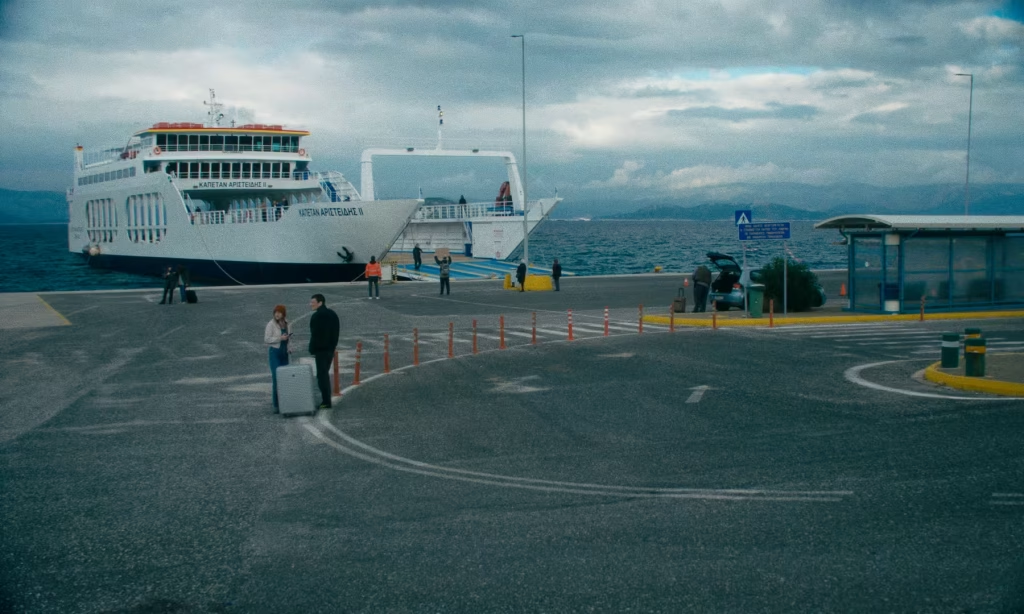
The visual language of the film is remarkably controlled. We frequently see symmetrical compositions, architectural framing, and carefully measured distances between characters and objects. How did you and cinematographer Giorgos Koutsaliaris develop this visual approach together?
Giorgos and I already knew each other well before this collaboration, and I had always admired his work. I felt that we would be a good match because we share a similar cinematic sensibility and visual language. We had a number of meetings before the shoot, but not an endless amount. We tried to avoid over-explaining how I imagined the film and instead exchanged references, allowing a common language to develop between us.
By the time we started shooting, I trusted Giorgos completely. We had already discussed where the emphasis of each scene should lie, so on set I could focus mainly on the actors, the blocking, and the feeling I wanted each scene to convey, while giving him the freedom to shape the image. At the same time, despite the apparent precision of the film’s visual language, there was also a significant degree of improvisation. This came from both the obstacles we encountered and the unexpected possibilities that emerged during the shoot.
“Through the sound design, I also wanted to bring the island and its landscape to life, as if the island itself were a third, active participant in the game being played between the locals and the tourists—a presence capable of intervening at any moment and altering the course of the game.”
The score often feels dreamlike and unsettling, sometimes even contradicting what we see on screen. How did you use music and sound design to shape the film’s distinctive tone?
While we were still developing the screenplay, I would read it while listening to a wide range of music through my headphones. Gradually, I narrowed this down to a small selection of tracks that helped me visualise the film more clearly. I was looking for something eerie and slightly obsessive, but which also contained an element of humour and absurdity. Quite coincidentally, one of the final three pieces I selected was by a Norwegian composer, Bjørn Bolstad Skjelbred. We eventually acquired the rights to it, and it became the film’s main musical theme.
We also collaborated with Greek composer Larry Gus to create the music that Tasos listens to through his headphones. I wanted it to feel as distinctive and singular as possible: a piece that could somehow reflect the underlying violence experienced by his family, while gradually building a sense of escalation that mirrors his growing need to release that tension in an equally personal and unexpected way.
Through the sound design, I also wanted to bring the island and its landscape to life, as if the island itself were a third, active participant in the game being played between the locals and the tourists—a presence capable of intervening at any moment and altering the course of the game.
“Everyday life, local customs, even intimacy can be transformed into experiences for someone else to consume.”

The Norwegian tourists are obsessed with avoiding the label of the “typical tourist.” Instead, they constantly seek an “authentic local experience.” Why do you think contemporary travellers are so driven by the pursuit of authenticity?
I think contemporary travel is no longer only about visiting a place; it has also become a way of constructing an identity. The search for authenticity allows us to believe that we are not “typical tourists,” that we are more curious, more sensitive, or somehow different from everyone else. But this desire contains a contradiction: as soon as an experience is identified as authentic, it can be packaged, reproduced, and consumed. In the world of Pirateland, the ordinary becomes exotic, and this absurd reversal makes everyday life increasingly surreal. But the same is also true of the world around us. Capitalism, and tourism along with it, no longer simply asks people to perform certain roles; more absurdly, it treats everything as though it were already a performance. Everyday life, local customs, even intimacy can be transformed into experiences for someone else to consume. I find this both dark and deeply comic.
“The role-playing therefore becomes a meeting point between two very different forms of repression.”
As the role-playing escalates, the tourists willingly submit themselves to staged captivity and even simulated violence. The film raises fascinating questions about power, consent, and fantasy. What interested you about exploring these blurred boundaries?
I imagined the tourists’ desire as emerging from a kind of unfreedom within the highly regulated societies in which they live. Their everyday lives may be safe and comfortable, but they also involve forms of restriction and repression. They are looking for a safe space in which they can surrender control, express what is normally suppressed, and allow both body and mind to move beyond permitted boundaries in order to feel something. In the heightened and comic world of the film, this desire takes the form of asking to become the victims of pirates. This was partly inspired by real forms of extreme tourism, including people who travel to war zones in order to experience the adrenaline of conflict, however irrational that may sound.
On the other side are the inhabitants of a small place like the one in our story. The oppression they experience is of a different nature, but it is still a form of oppression. Their need to survive pushes them into performing the role of the pirates, even though they are clearly not the ones who hold the real power.
The role-playing therefore becomes a meeting point between two very different forms of repression. Each side uses the fantasy to cross certain boundaries, but for very different reasons.
“The need to survive can transform a person, sometimes in ways they could not have anticipated.”

Manos initially appears gentle and reluctant, but he gradually begins to enjoy participating in the tourists’ fantasies. Do you see this transformation as the release of a long-suppressed desire, or as something created by the expectations of the visitors?
I see it as a combination of both. At first, Manos participates because he has to. He submits himself to the tourists’ expectations because he sees in them a possibility for his business to survive. Gradually, however, he begins to find a certain satisfaction in the role. The need to survive can transform a person, sometimes in ways they could not have anticipated.
At the same time, Manos is deeply attached to his past and his roots. This is reflected in the scenes in which he struggles with the roots of the tree in his courtyard, which continue to grow and break through the concrete slabs. His attachment is also a burden. The past can provide you with pride and beautiful stories, but living under its shadow can also carry a certain darkness. It is this darker side of Manos, combined with the need to survive, that drives his transformation and eventually pushes him into a kind of frenzy, powerful enough to confuse his moral compass.
“What is missing from his life is perhaps the possibility of imagining himself elsewhere.”
Tasos seems to be the emotional center of the film. Throughout the story he appears restless, disconnected, and searching for something he cannot articulate. What do you think is missing in his life?
Unlike his father, Tasos feels no real attachment either to the place or to the family business. He is a young man who feels trapped there, but he does not yet have the language to express that feeling clearly—not only to his parents, but even to himself. What is missing from his life is perhaps the possibility of imagining himself elsewhere.
“At the same time, it becomes his way of “speaking” to his father without words—an attempt to reach him and, perhaps, bring them closer together.”
The ending is particularly striking. While the tourists ask to be thrown into the sea with their hands tied, Manos refuses. Instead, Tasos suddenly throws himself into the water. Could you talk about the meaning of this final gesture?
The tourists become a catalyst for Tasos, allowing him to test his capacity to resist, take initiative, and affect both his own life and the people around him. In that sense, his final gesture is also a small act of growing up.
Given the film’s constant escalation, one might expect something terrible to happen at the end. But I wanted the ending to belong to Tasos, and it did not feel true to his character for him to lead the situation towards a violent conclusion. Instead, he responds with this awkward, immature, and rather strange act: he simply throws himself into the sea. Perhaps he does it to disorient everyone and interrupt the situation before something bad can happen. At the same time, it becomes his way of “speaking” to his father without words—an attempt to reach him and, perhaps, bring them closer together.
“This is why, for the past year, we have been developing Pirateland into a feature film.”
Looking back on Pirateland now, is there anything you would approach differently, or any aspect of the film that has taken on a new meaning for you since completing it?
There were many elements that I wanted—and kept pushing for—from the writing of the screenplay until the final day of editing, but which I ultimately could not fit within the short-film format. This is why, for the past year, we have been developing Pirateland into a feature film.
The feature allows us to explore the film’s themes more deeply: the tourists and their motivations, Manos and his profound internal transformation into a pirate, the role of the local community and how it is affected, as well as the island’s subtle, almost supernatural awakening.


Leave a Reply