


Austrian director and screenwriter Sandra Wollner’s Everytime follows Ella, her younger daughter Melli and Lux, the boyfriend of her late daughter Jessie, as they travel to Tenerife after Jessie’s death. By attempting to recreate a family holiday that never took place, the three enter a space where grief, memory and imagination become increasingly difficult to separate.
Following its world premiere at Cannes, where it won the Un Certain Regard Prize, Everytime had its regional premiere in competition at the Sarajevo Film Festival. Wollner spoke to Sinefil Atak about the image that inspired the film, the absurdity and unpredictability of grief, the digital traces left by the dead and the point at which realism can no longer contain loss.
Türkçe versiyonu için tıklayın… TR
This interview contains details about the film’s narrative. It has been edited for length and clarity.
One day after the interview was published, Sandra Wollner’s Everytime (2026) won the Heart of Sarajevo for Best Feature Film at the 32nd Sarajevo Film Festival.
“It could be a ghost, a memory or simply her imagination.”
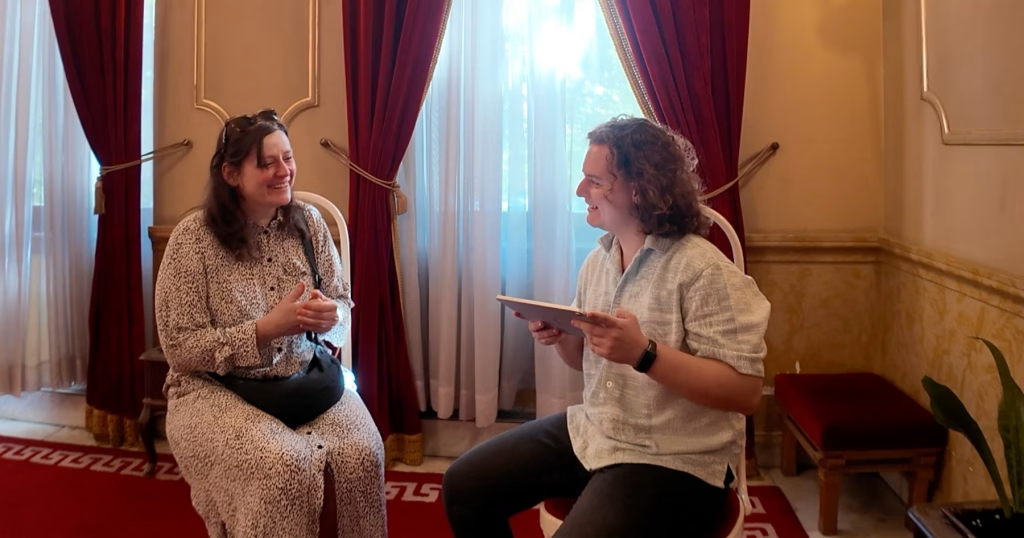
What came first in the development of Everytime: an image, a character or an emotion?
Maybe it was a bit of everything at the same time. One of the first images was of Ella, a mother, lying on the sofa after her daughter had died. She imagines, remembers or listens to someone coming home: opening the door, taking off her shoes, talking on the phone and laughing. They are glimpses of everyday life and of what her daughter sounded like.
You do not know exactly what Ella is hearing. It could be a ghost, a memory or simply her imagination. That was one of the film’s core images from the beginning.
“The trickiest part was knowing when to leave this realistic path, why to do it and what to embrace instead.”
What was the most challenging part of writing a story in which memory and reality constantly overlap?
The film begins in a very grounded, realistic world. We see everyday life in Berlin. The trickiest part was knowing when to leave this path, why to do it and precisely what to embrace instead.
There is something beneath the film from the beginning. We see glimpses of it coming to the surface, almost like a promise that the ending will be different from the film’s realistic opening.
The challenge was to protect the right ideas and remain conscious of those moments that might not initially make sense from a character’s perspective but still feel like the right approach for the film.
“Ella is searching for something on the island without knowing what she might find there.”
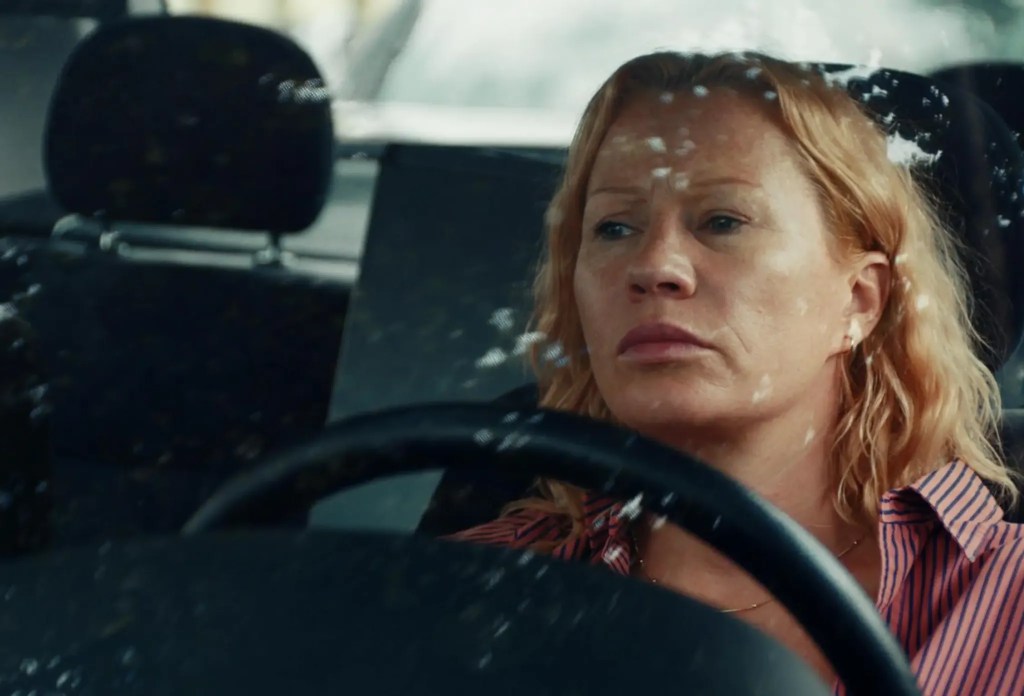
The family recreates a holiday Jessie never got to take. Is the journey an attempt to escape grief—or a performance of happiness?
They recreate a family holiday that never happened: a holiday Jessie could never take. Ella believes she is so far beyond her grief that she can take the same drug and follow the same path as her daughter. Perhaps she is trying to access Jessie’s perception and understand what she might have seen during her final moments.
They were supposed to leave for this exact holiday the day after the accident. Ella is searching for something on the island without knowing what she might find there. She is also trying to continue something that Jessie could not complete.
There is a kind of faith in this journey, as well as a happiness they are trying to hold on to. But faith does not always appear in a poetic or reasonable form. It can be bizarre, ambivalent and absurd.
There is also something manic in the way Ella reacts. She wakes them in the middle of the night and immediately takes them on holiday without telling anyone. It is an excessive positivity that tries to hold on to something.
“Perhaps even a fart can have a healing quality.”
When Lux unexpectedly farts, the characters begin to laugh, and their laughter turns into crying. How did you build that transition from an absurd moment to shared grief?
I was searching for a scene in which exactly this could happen. We begin with a kind of anger: the younger daughter is angry with her mother because she has done something she does not like. There is so much emotion beneath the surface, but they are holding it down.
I was looking for something they could laugh about—something so stupid that it could transform into a different emotional quality. That particular fart seemed like the right thing.
It is banal and small, but who would not laugh if it happened in real life? It can break an emotion or change the atmosphere in a room. When such powerful feelings have been hidden away, something this small can transform them. Perhaps even a fart can have a healing quality.
A fart also happens so abruptly that there is no time to control your reaction. You cannot hide your emotions from it.
“In the real world, whatever she does, nothing can change what happened.”

That emotional release briefly creates the hope that things might return to normal. Instead, the film becomes even more unpredictable. What changes at that point?
Ella understands something. While she is crying, she speaks in fragments: “I didn’t know” and “What did I think we were doing here?”
She begins to realise that she is not going to find the answer she was looking for. There may be no answer in a realistic or grounded world. Whatever she does, nothing can change what happened.
Her younger daughter, however, finds another way in which something might change. Lux’s role also transforms. When he accompanies Ella into the forest and they take the same drug Jessie took, he is almost like a trip sitter. He wants to prove that he can take care of her and observe what happens.
But once they decide there is nowhere else to go and begin planning to return home, his task appears to be over. There seems to be nothing more to say. Jessie will not come back—or will she?
“I wanted to leave open what that moment was.”
Lux later enters the river. The moment can be read as a suicide attempt, yet it also seems suspended between death and survival. How open did you want it to remain?
I wanted to leave open what that moment was. During the writing process, the possibility of a suicide attempt was very strong for me.
But I find it interesting that you saw it that way. I did not want to reduce the scene to one definitive explanation.
“Nothing will bring her back.”
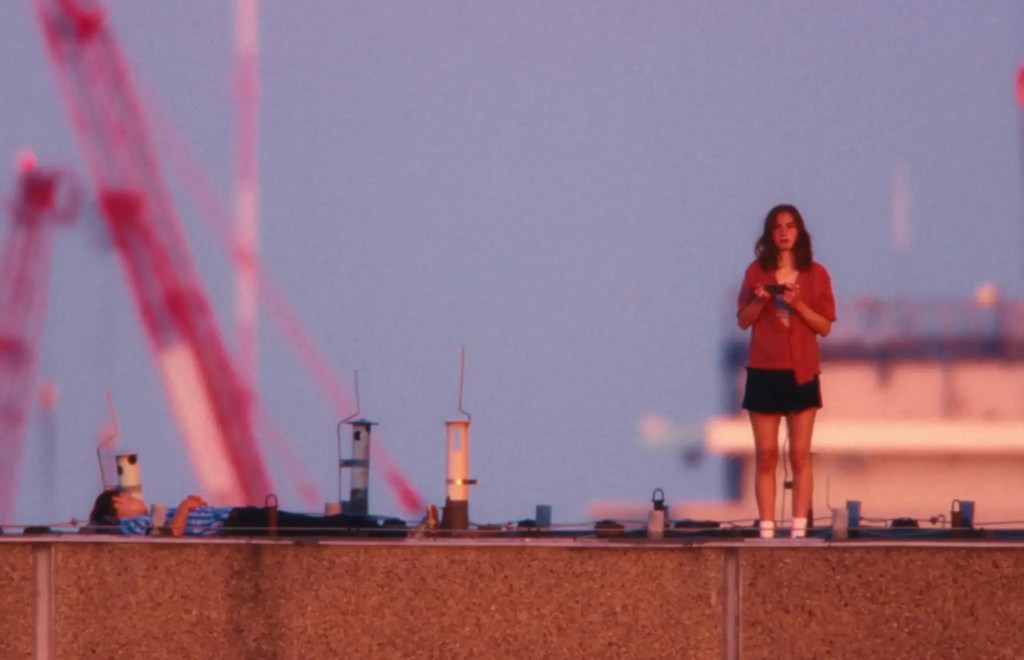
After the emotional release, the film moves away from realism. Why was that shift necessary?
There is no solution to what the family is experiencing. They are struggling with the loss of someone and trying to work out what the right thing is. But what is the right thing? Nothing will bring her back.
Logically, there is nothing they can do. They can go home, but nothing will change. Yet beneath the film there is an energy and a power—something suppressed—that I found more interesting.
It is something that cannot happen in life, but it can happen in cinema, literature or music. That is why I wanted the film to go there.
“This can also be a graveyard—a memorial for someone.”
The game initially recalls Minecraft, but it is actually Vintage Story. Why was this particular game right for the film?
It is called Vintage Story. It looks like Minecraft, and I think its creators may initially have worked on Minecraft, but it is a different game. For gamers, it is a more difficult version: you can die much more easily.
It was clear from the beginning that I wanted to use this game. I had explored it a few years earlier and found it very interesting. I loved its ambient sound and the simplicity of its world. It has the feeling of liminal spaces or backrooms—something soothing and eerie at the same time.
It also made sense that one of our central characters, a sixteen-year-old, would play it. I found the possibility of treating the game as a memorial very touching.
We know memorials as photographs, memories or places connected to people. Here, the younger sister enters a place her older sister built and walks through that world to reconnect with her. The film does not explicitly say this, but it was clear to me.
This can also be a graveyard—a memorial for someone.
“In every cloud, we have their ghosts. We are surrounded by them.”
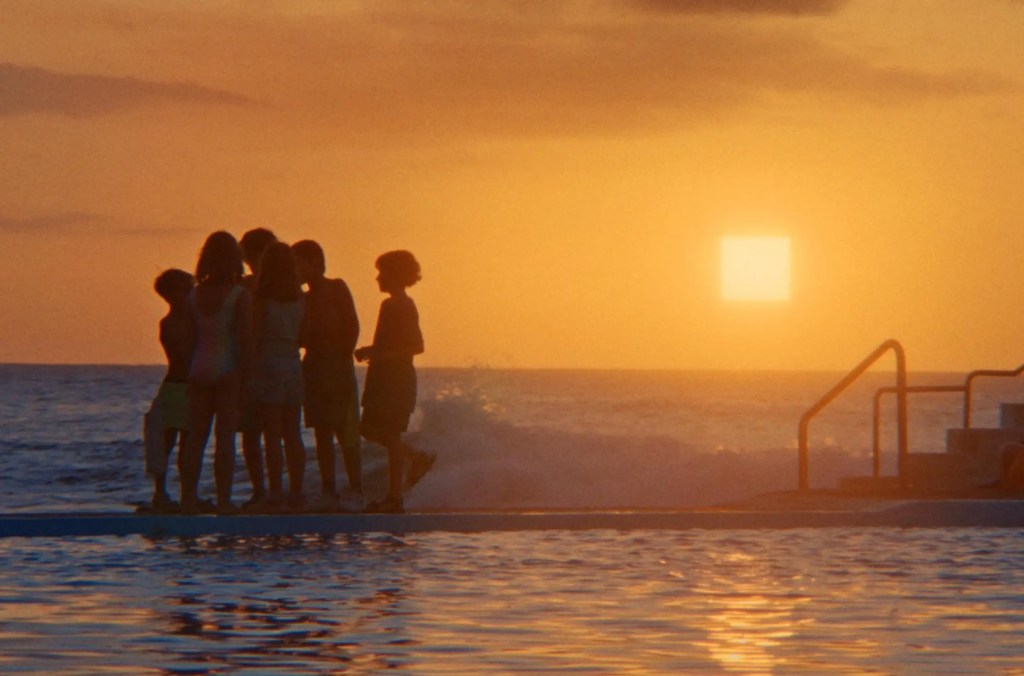
Does the game represent the way memory and imagination overlap in your films?
We now live in a time when people exist across social media and avatars remain somewhere in the world. In every cloud, we have their ghosts. We are surrounded by them. I found this a very interesting space in which to explore grief.
My previous films also exist within strange constellations of memory, imagination, inner worlds and outer worlds. This is something that interests me as a human being.
We always carry our fiction inside us. We carry our inner worlds with us—not only when we write stories but in everyday life. Even if we agree that we are sitting in the same room, on chairs and on a red carpet, we still carry our own worlds within us.
Our identities are built partly on fiction because we construct our memories. That does not mean our memories are false or that we hallucinate them. But there is a very close connection between memory and imagination.
In my films, I try to find places where inner and outer worlds connect and overlap. The world of Vintage Story can be seen as part of Jessie’s inner world, or perhaps Melli’s, while the external world is the reality in which the characters now live. Somehow, these worlds need to overlap.
“The music begins inside the game, but gradually becomes the film’s score.”
How did you use music to connect the game world with the characters’ physical reality?
Some of the music comes from the game and begins as its ambient track. It then develops into something used to score the film. We hear the same or a similar melody, but its function changes.
At first, we hear it as music that exists within the scene rather than as part of the score. As the film progresses, it gradually becomes the score—particularly in the second half, when Melli becomes more central.
I would not call it gamification, but the two worlds begin to overlap. We tried to reflect that movement through the music as well.
“None of the film’s score was created with Suno.”
The credits mention Suno. How did artificial intelligence enter the film’s music and sound world?
People sometimes assume that part of the score was made with artificial intelligence because Suno appears in the credits. But none of the film’s score was created with Suno.
We used it only for small pieces of material within the film’s world. For example, we needed music for a fictional, generic fast-food commercial. We did not want to use the work of an actual commercial brand, so we created that material ourselves with AI.
“We are deconstructing memory.”
Gregory Oke’s cinematography in Aftersun helps reconstruct a fragmented memory. In Everytime, memory seems to become increasingly unstable. How did you develop that visual approach together?
We are deconstructing memory. Aftersun is such a beautiful film. My films have always been interested in reality, imagination and in constructing or deconstructing memory, so when I saw Aftersun, it felt very close to home.
I loved the precision of Gregory’s images. I felt that the perspective of the people behind the film came through in the cinematography. I looked for Gregory and discovered that he was living in Berlin, where I also live. We met and connected.
It was not a matter of seeing an amazing film and wanting to work with someone simply because of his name. That would not work for me. We realised that we had a similar approach to how we wanted to work.
Even before Gregory joined the project, I knew that I wanted some of the images to be shot with an extremely long, almost paparazzi-like lens. I wanted certain moments to appear very far away and yet still feel close and intimate.
The falling sequence and the opening were already similar to what I had imagined while writing. The camera’s movement towards the small reuse vehicle with its blinking light was also established during the writing process.
“The main thing that changed was that the film received more attention.”
What did winning the Un Certain Regard Prize at Cannes change for the film?
It helped people see the film. When you go to a major festival, you reach a large audience. It was amazing to be there, to show the film in a cinema and to experience it with such an appreciative audience.
But to answer pragmatically, the main thing that changed was that the film received more attention. More people saw it, and more festival programmers invited it.
“I did not expect the film to connect with people so strongly.”
Is there a particular audience response that has stayed with you?
I was quite overwhelmed by the way people connected with the film on an emotional level. This happened at festivals, at individual screenings and during its theatrical release in Germany.
People sometimes approached me afterwards and shared their own stories of loss. I did not expect the film to connect with people so strongly. That was beautiful.
“In Sarajevo, I was asked whether the film could be a memorial for those we have lost in general.”

Have you noticed differences in how audiences from different cultural backgrounds respond to the film’s treatment of grief?
I can only speak from my own limited perception, and I do not want to make that judgement for audiences—especially here in Sarajevo.
I had an interesting radio interview here with two women whose questions were translated for me. In Germany, Austria and France, the film had not been connected to the idea of universal trauma. People usually related it to a particular relative or to one person they had lost.
Here in Sarajevo, I was asked whether the film could be a memorial for those we have lost in general. I found that to be a different and broader approach.
Perhaps it has something to do with Sarajevo’s closer and more recent history of war and trauma. But I want to be very careful. This is only something I perceived through the questions people asked me. We would have to ask the audiences themselves whether their experience is different.
“I hope my films will have the opportunity to meet audiences in Türkiye.”
Have any of your films previously been shown in Türkiye?
Unfortunately, not yet. There may have been a possibility in 2020, but then the pandemic happened.
I hope my films will have the opportunity to meet audiences in Türkiye.

Leave a Reply