


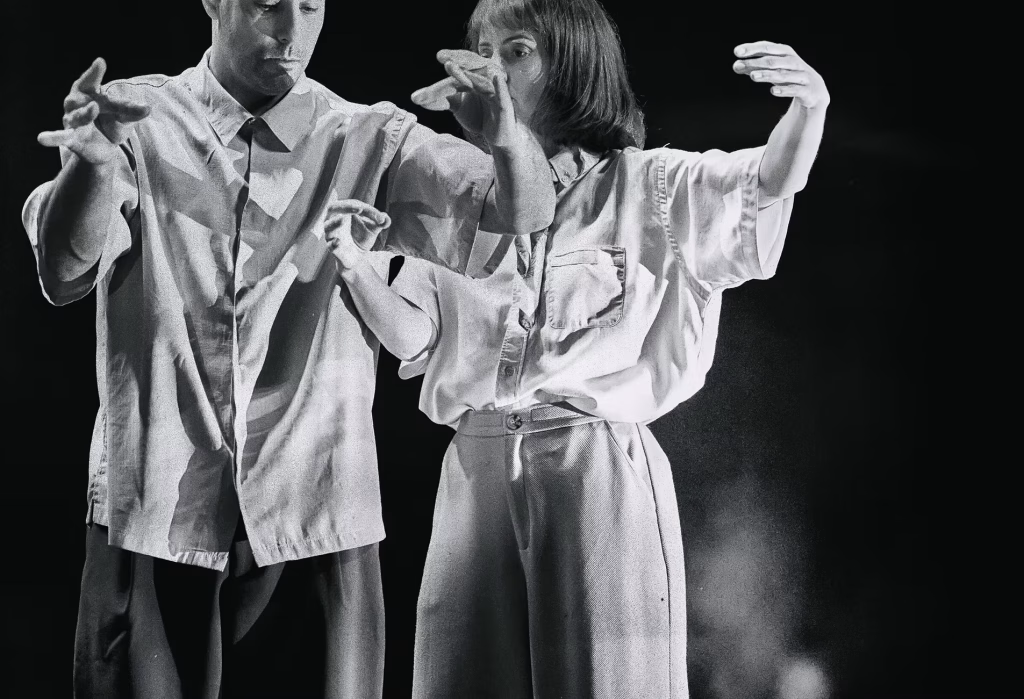
I watched Souvenirs as part of the 44th Hülya-Özdemir Nutku International İzmir Theatre Festival, a layered performance by Claire & Antho that brings together dance, shadow, and live video. On stage, three planes coexist at once: the physical performance, the images projected onto the screen, and the shadows shaped by light. Together, they create a fluid passage between stage and cinematic language.
Across these shifting layers, a relationship unfolds through rhythm, distance, and memory. Suitcases open, and the past returns; moments fall out of sync, then find each other again. Souvenirs moves between these fragile states, placing side by side the times when two people drift apart and the moments they meet in the same rhythm.
We spoke with Claire and Antho about how they built this three-dimensional language, how they blur the line between stage and cinema, and how this sense of harmony comes to life.
TR | EN | Türkçe versiyona buradan ulaşabilirsiniz.
“They don’t feel as if they watched a show, but a full immersion into our story.”
Your performance at times feels like watching a film. Was this balance between stage and cinematic language a conscious choice?
Yes, we would like to take people into our memories so that they don’t feel as if they watched a show, but rather a full immersion into our story.
So we act like in a movie, in an organic way, and we use the camera to create that immersion, as well as the direction, which has been made to mix everything, so the audience doesn’t feel like they are watching frames positioned beside each other.

While performing across different planes, how do you achieve such a strong sense of harmony? What kind of rehearsal method helps you sustain this balance on stage?
We absolutely wanted the story to be at the forefront, and for that, when we create, the dance, shadows, or videos always have to be part of the story, always tell the story, and serve what we want to express.
Then the movement is very important to coordinate the whole thing, but always acting at the same time.
“The suitcases are a metaphoric image.”
I read the suitcases as the invisible weight each person brings into a relationship—past, wounds, unfinished parts. What do the suitcases represent for you?
The suitcases we have in the show represent everything we live through in our lives, everything we have to deal with—not only in relationships, but in every aspect of life.
The suitcases are a metaphoric image.

Each time a suitcase is opened, the past seems to return to the stage. Is your relationship with the past more about confronting it, or reinterpreting it?
It’s more about facing our past.
Sometimes memories are painful, sometimes they make us feel good, but in any case, they make us feel alive and help us deal with what we’ve been through, allowing us to grow and become stronger.
In one scene, Claire approaches emotional exhaustion and Anthony helps her rise again; when the roles reverse, Anthony is left alone. What does this contrast mean to you? Is it a rupture, or simply the nature of a relationship? Why is Anthony unable to receive support in that moment? What does that solitude represent for you?
When Anthony feels bad, Claire helps him to feel better. Maybe you didn’t get it. Just for you to remember, when the memory of his childhood with the violent stepfather comes back to the surface, Claire helps him to remember his dreams, not forget them, and to keep going. She is the one who helps him to keep dreaming and to face his suitcase.
Both of them are there to help each other. They are in a balanced relationship.
When the song Beanie enters, the emotional tone of the performance shifts noticeably. What is the role of this song within the piece? Does this song represent a memory for you, or a feeling?
When Anthony puts his helmet on, we can hear Beanie. The song brings him back to his memories.
Then he opens his suitcase and sees photos, videos, and the scarf that belonged to Claire.
Later in the show, we see Claire put her helmet on when they meet for the first time, and this is the Beanie song. And later, when she feels bad, she listens to that song again.
It was her favorite song, so this music is special to Anthony. Every time he hears it, it brings him back to the memory of their story.
Bringing your own lives and relationship onto the stage in such a direct and exposed way—what does that feel like? How do you navigate this emotionally?
It’s very emotional to live our stories on stage, but it’s a moment we want to share with people. We know that the themes we explore in the piece are universal.
People tell us after the show that they felt like they were in their own story and that it’s like a deliverance to feel all these emotions, and that’s exactly what we wanted to achieve with this play.
“Our memories brought them into their own memories.”
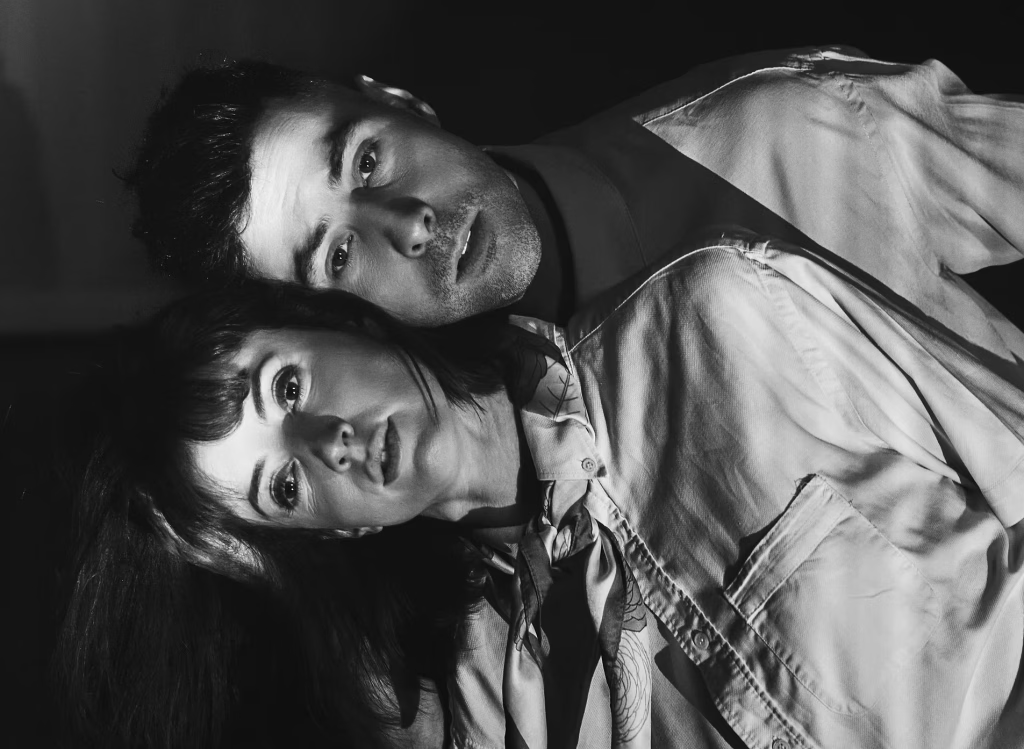
In the end, what remains are memories. During the creation or touring process of Souvenirs, is there a moment that has stayed with you?
The moments we keep in mind are when we talk with people after the show and they tell us that our memories brought them into their own memories and that it feels like our stories match.
It’s very powerful and meaningful to us.
“It is two souls that meet.”
On stage, we witness two people finding each other in the same rhythm. When do you think two people truly meet in that shared rhythm?
We think it is two souls that meet, but we don’t really choose the moment. It’s when we feel that balance that the magic happens.

Bir Cevap Yazın