

Polish cinema can it be read not only through its films, but also through the cultural networks, historical ruptures, and production practices that make them possible?
The 45th Istanbul Film Festival offers a compelling ground to trace this question. In this conversation with Elżbieta Chrzanowska, cultural events producer at the Adam Mickiewicz Institute (IAM), and Bolesław Racięski, film expert from the Faculty of “Artes Liberales” at the University of Warsaw, we approach Polish cinema from a multi-layered perspective.
From Andrzej Wajda’s sense of historical responsibility to Andrzej Żuławski’s contested legacy, and from the often-invisible dynamics of festival networks to the conditions of contemporary production, this installment of Industry Talks invites a reconsideration of cinema not merely as an aesthetic form, but as a matter of memory, resistance, and circulation.
TR | EN | Türkçe versiyona buradan ulaşabilirsiniz.
First of all, hello. Thank you for accepting our interview invitation. Could you tell us a bit about yourself and your journey alongside these masters?
Hello 😊 Thank you for inviting us to this conversation!
How has your experience at the Istanbul Film Festival been so far? How does it feel to be a part of this event; What are your impressions of the Turkish audience?
Ela Chrzanowska:
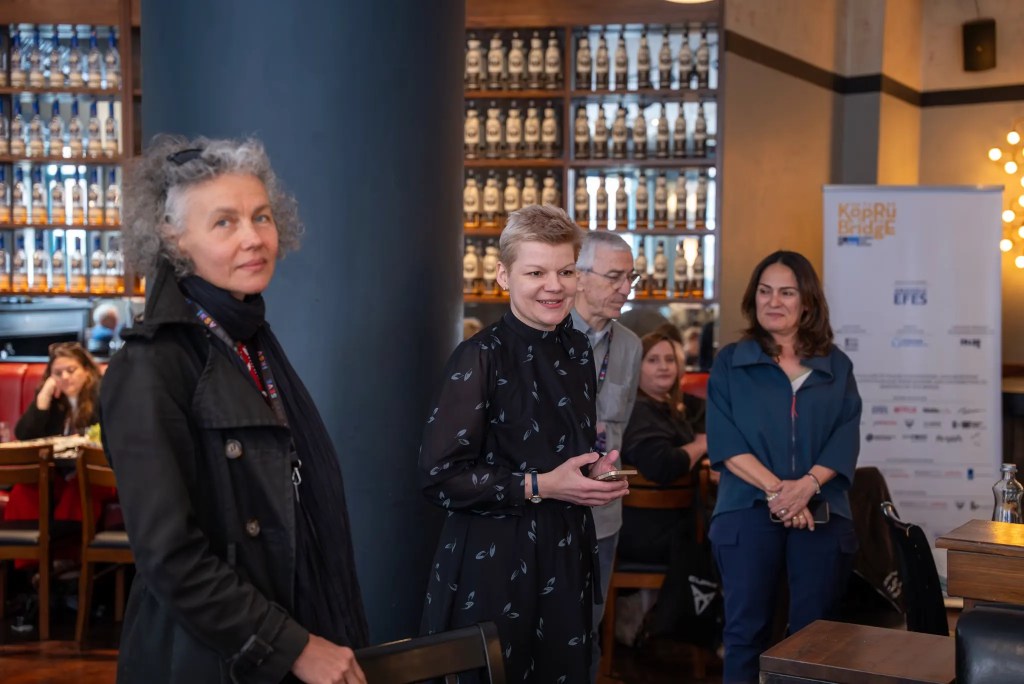
The 45th edition of Istanbul Film Festival was the first one I attended and I was lucky to participated in Meetings on the Bridge, as Adam Mickiewicz Institute (IAM) supported this wonderful and important event for filmmakers from Türkiye alongside international cinema professionals from all over the world including Poland. We invited three Polish film producers with international coproduction experience: Anna Gawlita from Kijora Films, Maria Blicharska-Lacroix from Blick Productions International and Agnieszka Marczewska from Wajda School and Studio from Warsaw. We had a chance to discover great films projects on their early stage during the pitching sessions and to meet directors, producers, festival curators and programmers. It was a really inspiring networking activity that we could celebrate also during networking lunch hosted by IAM in a beautiful and antique part of Istanbul Beyoğlu with its Belle Époque style restaurant Kevok.
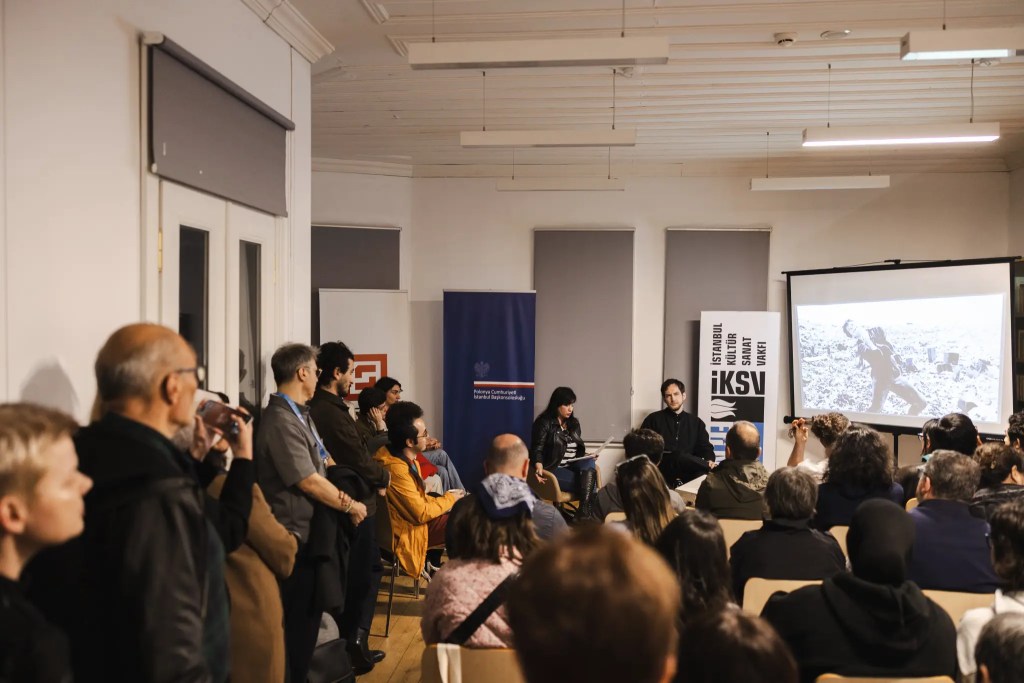
We also organized an event as a part of Andrzej Wajda centenary that we celebrate in 2026 which was a screening of “Ashes and Diamonds” (1958) followed by the Polish film historian Bolesław Racięski lecture. Sinemateka screening room was full of cinema lovers as well as the academic lecture after. The Turkish audience showed a great interest in Polish films and for us, as a state institution that its mission is to bring Polish culture to people around the world, was very rewarding to be a part of this community during the festival in Istanbul! Thank you for that!
More about Polish culture: Culture.pl EN | Polish Culture At Your Fingertips | Culture.pl
Andrzej Wajda was often regarded as the ‘conscience’ of Poland. When reconstructing a historical tragedy behind the scenes, how did this sense of social responsibility manifest in his work ethic and daily set discipline?
Bolesław Racięski:
From accounts by his collaborators and from Andrzej Wajda’s own diaries, a portrait emerges of someone who always knew the weight of responsibility on his shoulders, and whose work was a fascinating blend of perfectionism and intuition – it’s that intuition, for instance, that led him to cast Zbigniew Cybulski in Ashes and Diamonds. At the same time, it’s often pointed out today that on the sets of some films – especially The Ashes and A Chronicle of Amorous Accidents – the director wasn’t always able to meet the ethical challenges that came with filmmaking.
Symbolism is the backbone of Wajda’s cinema. From your perspective, how did he decide that a shot was ‘perfect’? What was his ultimate criteria for visual storytelling?
Bolesław Racięski:
You might half-jokingly say that, for Andrzej Wajda, a shot reached perfection the moment a horse appeared in the frame – a beloved emblem of the Polish cavalry. But even without it, the image had to cut past language entirely and address consciousness head-on, both individual and national. Wajda was also notably fortunate in his collaborators behind the camera – he was almost always working with exceptional cinematographers.
In Żuławski’s films, we witness actors delivering hysterical, almost trance like performances. How are his films perceived today by Polish filmmakers, and what can you say about the current state of Polish cinema in light of his legacy?
Bolesław Racięski:
Today, Andrzej Żuławski is seen both as a visionary whose imagination the communist system simply couldn’t contain, and as a striking example of how not to treat actors in a healthy working environment. His legacy is also quite literal – his son, Xawery Żuławski, continues to make films, including projects based on his father’s previously unrealized scripts.
There is a striking parallel between Polish and Turkish cinema. The story of Metin Erksan’s Dry Summer being banned in Turkey only to win the Golden Bear in Berlin mirrors Żuławski’s forced departure after The Devil. As a representative, do you think international acclaim for a ‘prohibited’ work alleviates the pressure on a director, or does it confine them to a more melancholic and exiled state of mind regarding their homeland?
Bolesław Racięski:
I think international recognition above all gives directors a way to make a living and keep working – and with that, sustain the hope that one day their films will also be shown at home. That very basic factor seems crucial to me, especially since success abroad can easily be turned against them by domestic propaganda.
The sharp language of Poland’s ‘Third Generation’ directors and the ‘Social Realist’ movement in Turkey (led by figures like Metin Erksan and Yılmaz Güney) seem to stem from the same root of resistance. Was the similarity between these two geographies both caught between East and West ever a topic of discussion among Żuławski and his colleagues? How did that ‘spirit of resistance’ in Turkish cinema look from your perspective?
Bolesław Racięski:
No, never – Polish filmmakers rarely entered into that kind of dialogue, and in any case had very limited opportunities to do so. Exchanges like that tended to happen more within international, festival-going cinephile circles, though it’s hard to deny they made sense: both countries were grappling with censorship and a dramatic split between modernity and the regime. Had Polish directors had more chances to engage with Turkish cinema, they might have been more open to experimenting with various forms of social realism.
Looking at Jerzy Skolimowski’s filmography is like looking at history itself. Coming from a background of social realism and being an alumnus of the Łódź Film School, he pioneered a revolution. If we were to ask you to describe those early days, what would you say are the most significant differences in filmmaking practices between the past and the present?
Bolesław Racięski:
Jerzy Skolimowski made his debut in a distinctly unusual way: Identification Marks: None was essentially a set of film school exercises woven into a coherent whole. His work, like that of his peers, had to contend with numerous constraints: limited access to film stock, crews, and even what could be said on screen – not to mention the bureaucracy of a poorly centralized state. Today, making and distributing a film is far easier, but Polish cinema faces a new set of challenges and constraints: market logic, platform ecosystems, and attention economies.

Leave a Reply